


OPINION
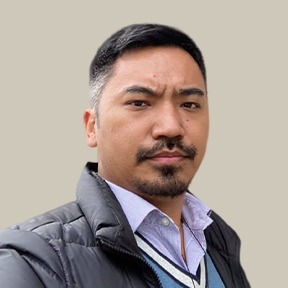
As candidates campaigning for the 2026 exile Tibetan elections vow to stand for what they call “unity”, Thupten Chakrishar* contends that what we need are leaders who understand that their job is not to make us the same, but to help us work together while remaining who we are.
As the Tibetan elections approach, the word “unity” echoes through campaign videos and statements. Candidate after candidate promises it, calls for it, insists upon it.
But what do they mean?
Unity of what, exactly? Physical unity is impossible — we are scattered across continents. Emotional unity? Perhaps, but emotions cannot be commanded. Ideological unity? Ideological unity? Here we must pause. Because unity that requires everyone to think the same way is not unity — it’s uniformity.
I’ve been sitting with this question for a while now, and I don’t have a complete answer. But I think it’s worth asking candidates directly: Are you offering to hold us together, or are you asking us to become the same?
—-
The Blender and the Sushi
There are two ways to bring different ingredients together.
The blender makes everything uniform. The original ingredients lose their form, their texture, their distinctness. And when the result doesn’t taste right, you blame the ingredients — or blend harder.
Sushi works differently. The tuna remains tuna. The cucumber remains cucumber. They do not dissolve into each other. But wrapped in nori, they function as one piece.
Currently, it feels like we are putting everything in a blender and arguing about why the taste isn’t right. Perhaps the answer is to stop blending altogether.
—–
The Unity That Already Exists
Here is something I have observed while traveling: when there are only a few Tibetans in a place, they become close. Naturally, effortlessly. No one asks if you are Khampa or U-Tsang-pa or Amdowa. No one inquires about your position on rangzen or umaylam. You are Tibetan. They are Tibetan. The bond is immediate.
This tells us something important. The unity already exists. It is the default state. When only a few Tibetans live in a small American town, they become close — naturally, easily. No speeches required. The bond forms on its own.
So the fractures we experience are not inherent to being Tibetan. They emerge under specific conditions — when there are enough of us to afford subdivision, when institutions create something to compete for, when we have enough safety to turn inward.
The question, then, is not how do we create unity?
The question is: what makes us forget the unity that is already there?
I’m still thinking about this. But I suspect the answer has less to do with ideology and more to do with how we structure our institutions and conversations.
—-
The Mother on the Hill
Imagine a mother in trouble at the top of a hill. Her children rush to help, each choosing a different path — one steep, one winding, one through the forest.
The mother does not care which path they take. She needs them to reach her.
Now imagine those children standing at the foot of the hill, arguing about whose path is correct. Hours pass. The mother waits.
I don’t know which path is right. Maybe none of us do. But I do know this: the tragedy is not that we disagree on paths — disagreement is natural when the terrain is uncertain. The tragedy is that we have made the argument about paths into the identity itself. Movement toward her — any movement — matters more than being right about the route.
—-
The Arithmetic of Survival
Six million Tibetans inside Tibet. Perhaps 150,000 in diaspora. No territory. No state with real power. Scattered across dozens of countries.
In this situation, fragmentation is not merely inefficient. It is an existential risk. A large nation can survive internal factions because there is enough mass to absorb the fractures. We do not have that margin.
—-
Everyone Is Already Inside
If unity means anything, it must mean everyone.
Those who speak fluent Tibetan and those who understand but struggle to speak it. Those born in settlements and those born in the West. Those who just arrived from Tibet and those whose families left in 1959. Those from Kham and Amdo and U-Tsang. Those who advocate for rangzen and those who support umaylam. Those who are fully Tibetan and those who are mixed. Those who practice Buddhism and those who don’t. Those deeply embedded in community life and those who feel they exist on the margins.
Each of these people carries Tibet within them. Each of them is Tibetan.
—-
A Question for Every Candidate
Forced uniformity destroys the very thing it claims to protect. The path forward is structural acceptance of difference within a shared frame.
So when a candidate speaks of unity, perhaps we might ask:
Are you offering to hold us together while letting us remain what we are? Or are you asking us to dissolve into your version of what Tibetan should mean?
I don’t expect easy answers. But I do think the question matters.
We are already Tibetan. We are already connected by something that needs no campaign speech to exist. What we need are leaders who understand that their job is not to make us the same, but to help us work together while remaining who we are.
And remember — the mother on the hill is still waiting.
—-
* Thupten Chakrishar is a New Paltz, New York-based technologist and social entrepreneur who co-founded the Himalayan Elders Project. He enjoys exploring questions of Tibetan identity, community, and civic life through his writing at chakrishar.com.