


OPINION
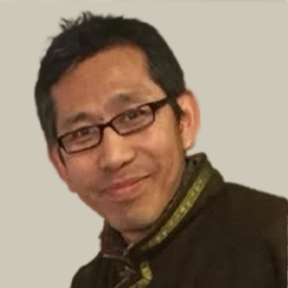
Tenzin Sherap* presents his case for the re-election of Sikyong Penpa Tsering for a second term in the 2026 Tibetan elections.
I fully respect everyone’s right to express their views. However, calls for “new” or “younger” leadership—without clear reasoning or substance—risk turning our democratic process into a search for novelty rather than a serious evaluation of merit. Tibetan leadership is not a ladder for personal advancement. It is the highest responsibility entrusted to individuals by a people fighting to preserve a nation, a culture, a spiritual heritage, and an identity under existential threat.
Demanding change for its own sake—especially when we have a proven, effective, and deeply committed leader like Sikyong Penpa Tsering—is like discarding 24-carat gold because misinformation insists it is brass. His record is built on tangible results, hard-earned achievements, and unwavering devotion to the Tibetan cause.
Achievements that speak for themselves
Sikyong Penpa Tsering’s leadership has been among the most results-driven periods in CTA history. He delivered on the core pillars of his manifesto—Equitable, Co-effort, and Moving Forward—through concrete policies and measurable progress. A standout example is the historic passage of the Resolve Tibet Act in the U.S. Congress, an achievement requiring vision, persistence, and the trust of international partners.
Sikyong Penpa Tsering is the only Sikyong or Kalon Tripa in CTA history to hold formal courtesy meetings with sitting presidents of sovereign countries in support of the Tibetan cause—French President Emmanuel Macron on May 1, 2024, and Czech President Petr Pavel on July 27, 2025. These meetings reflect the international respect and trust he has earned while advancing Tibet’s interests.
On June 13, 2024, he received the NED Democracy Service Medal, recognizing his leadership in promoting Tibetan democracy in exile, advocating human rights and cultural freedom, and strengthening democratic institutions within the CTA. He has become a prominent voice mobilizing global support for Tibet and defending democratic values.
Unlike predecessors, he presented detailed short-term, mid-term, and long-term goals, demonstrating a leader who comes to office with a clear plan—not for personal power, but for advancing Tibet’s cause in alignment with the guidance of His Holiness the Dalai Lama.
His commitment is lifelong, not limited to election cycles. In a widely viewed 2016 interview with VOT journalist Gadhong Wangdak, he stated that his entire life is dedicated to the Tibetan cause, regardless of electoral outcomes—a clarity of purpose that sharply contrasts with those who treat leadership as just one option among many.
A leader who has earned continuity
While these achievements speak volumes, Tibet now requires not only results but sustained leadership. As His Holiness turns 90, the nation faces a critically sensitive phase demanding experienced, results-driven guidance. Continuity in Sikyong Penpa Tsering’s leadership is essential for stability and strategic preparedness.
Fairness alone dictates that a leader who consistently delivers deserves the same two-term opportunity afforded to predecessors. Yet the case for a second term goes far beyond fairness—it is about responsibility and continuity. Many of his major initiatives are in critical stages right now:
Major initiatives in critical stages
• Consolidating smaller settlements and scattered Tibetan populations outside formal settlements, creating sustainable centers where the CTA can provide housing, facilities, and jobs—ensuring the long-term survival of Tibetan culture, language, and struggle
Includes Sikyong PT’s initiative offering free housing or land to Tibetans without settlement access
• Expanding affordable housing and consolidating Tibetan schools by collaborating with administrations, addressing the sharp drop in student numbers due to migration to Western countries
• Strengthening international advocacy and legislative engagement beyond the Resolve Tibet Act
• Digitizing major Buddhist scriptures (Kagyur & Tengyur) and CTA’s historical documents for preservation and scholarly access
• Consistently highlighting Tibet’s status as an independent nation prior to the CCP’s 1950 occupation to support the Middle Way policy for genuine autonomy
These initiatives require stability, continuity, and a leader already trusted by international allies.
Spiritual recognition in a deeply spiritual nation
Tibet is not only a political nation; it is profoundly spiritual. The consistent support offered by the State Oracle, Nechung, for Sikyong PT carries significant cultural and historical weight. The Oracle has repeatedly affirmed that Sikyong PT aligns with the wishes of His Holiness the Dalai Lama, even offering him a ring—an extremely rare gesture of spiritual endorsement.
In our exile history, only a few esteemed figures, such as H.E. Yongzin Ling Rinpoche and former Kalon Tripa Samdhong Rinpoche, have received such recognition. For a Tibetan leader, few honors are more meaningful, signaling both spiritual alignment and moral authority.
A leader for the moment—and for the future
Sikyong Penpa Tsering has gone beyond fulfilling promises; he has strengthened every department of the Kashag and elevated Tibet’s visibility on some of the world’s most influential stages. His leadership combines competence with humility, discipline, and genuine devotion to the Tibetan people.
Simply put, he is the most trusted, hard-working, and effective Tibetan political leader since His Holiness the Dalai Lama transferred political authority in 2011.
Conclusion: A second term is essential
The call to re-elect Sikyong Penpa Tsering is not about loyalty to an individual—it is about loyalty to Tibet’s cause. It is about choosing proven leadership over uncertainty, substance over slogans, and dedication over ambition.
He is not just a capable leader—he is a jewel of our nation, shaped by decades of service, guided by the wisdom of His Holiness, and strengthened by the trust of the Tibetan people.
A second term for Sikyong PT is not only deserved—it is vital for Tibet’s continuity, stability, and long-term survival.
—
* Tenzin Sherap is a Tibetan astrologer who graduated from Men-Tsee-Khang College in Dharamsala, India, in 2004. He currently resides in Minnesota, USA, and has served as Secretary and Program Manager of the Tibetan American Foundation of Minnesota (TAFM), and as a Tibetan language teacher at TAFM’s weekend school.