


OPINION
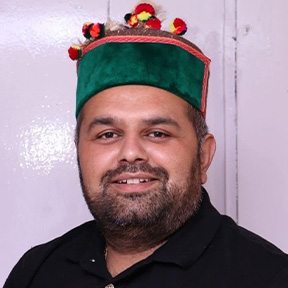
China’s continuous strengthening of its decades-long crackdown on monasteries, language, schools and public gatherings in Tibet means that its persistent, often murky and disturbing, efforts to sideline the Dalai Lama, and his enduring presence in Tibetan consciousness, has been an abject failure even as the exile spiritual leader heads towards his 91st birthday, writes Saurabh Chauhan.*
As His Holiness the 14th Dalai Lama approaches his 91st birthday, the Tibetan Centre for Human Rights and Democracy’s Annual Report 2025 offers a sobering snapshot of life under tightening Chinese control. The document details another year of intensified surveillance, legal manoeuvrers and ideological campaigns aimed at reshaping Tibetan identity. Yet beneath the crackdowns on monasteries, language, schools and public gatherings runs a stubborn truth: despite nearly seven decades of rule and repeated efforts to sideline him, the Dalai Lama’s presence in Tibetan consciousness endures.
The report isn’t solely about him, of course. It documents environmental stand-offs, language erosion, arbitrary detentions and the slow strangulation of everyday Tibetan life. But time and again, the authorities’ actions circle back to the same fixation—any visible expression of Tibetan identity, faith, or loyalty that points toward the Dalai Lama.
One of the most haunting cases is that of Tulku Hungkar Dorje, the respected abbot of Lung Ngon Thubten Choekor Ling Monastery in Golok. Officials zeroed in on him after he declined to stage a grand welcome for Beijing’s appointed Panchen Lama and instead held a long-life prayer ceremony for the Dalai Lama. Facing repeated interrogations and mounting pressure, he slipped out of Tibet toward Vietnam. What happened next is murky and disturbing. In March 2025, he was detained in Ho Chi Minh City in what appears to have been a coordinated operation between Chinese and Vietnamese authorities. Days later, Vietnamese officials announced he had died of a heart attack—though he had no known history of heart trouble. Four UN human rights experts later called for an independent investigation. For many Tibetans, the real message was clear: even private acts of devotion to the Dalai Lama can carry lethal consequences.
This anxiety runs like a thread through the whole report. Around the time of the Dalai Lama’s birthday on July 6, Chinese security forces ramped up operations across Tibetan areas. Police and military personnel flooded towns and monasteries. Homes and monks’ quarters were searched, photos of the Dalai Lama confiscated and residents pressured to sign loyalty pledges to the Communist Party. Some were warned against any public display of affection or prayer for him.
The broader assault on Tibetan Buddhism continues under the banner of “Sinicization.” New regulations on Tibetan Buddhist temples that took effect in January 2025 demand that monasteries and monks uphold Party leadership, promote socialist values and toe the line on political education. Quotas, bureaucratic hurdles for monastic study and ideological campaigns have further squeezed the space for genuine religious life.
The same pressure shows up in education. Authorities are steadily sidelining the Tibetan language. Changes to the gaokao university entrance exam, set to kick in from 2026, will drastically reduce Tibetan’s role. On Chinese social media, even some non-Tibetans pushed back, with one widely shared comment noting that “language and culture are the most precious wealth in the world.” Then came the abrupt shutdown of the Dorje Ten National Vocational and Technical School in Golok. The school, which taught Tibetan alongside traditional arts and medicine, had educated over 5,000 students. In December 2025 its founder, Choktrul Dorje Ten, was detained and the school was closed.
Even protests that start as environmental concerns quickly reveal deeper cultural stakes. In February 2024, hundreds of Tibetans in Derge—including monks, nuns and villagers—gathered peacefully against a hydropower project that threatened local villages and several historic monasteries. The response was overwhelming: mass arrests, with more than a thousand people reportedly detained, harsh conditions in custody and a sweeping security lockdown. What looked like an environmental dispute was, at heart, about protecting places woven into the fabric of Tibetan religious and communal life.
Scholar Robert Barnett once observed that while Beijing has gained firm physical control over Tibet, it has never quite managed to win Tibetan loyalty. The TCHRD report suggests that gap remains wide. The harder authorities push—through surveillance, school reforms, monastery controls and punishment for the smallest acts of cultural or religious expression—the more apparent it becomes that something vital refuses to yield.
As Tibetans mark the Dalai Lama’s 90th birth year, both inside Tibet and in the diaspora, this report feels like a quiet act of witness. The struggle isn’t only about political rights. It’s about whether a language, a faith and a way of seeing the world will survive for the next generation. Beijing’s persistent obsession with the Dalai Lama, even after all these years, may be the clearest sign that his influence—and the resilience it represents—has not been broken.
—
* Saurabh Chauhan is a journalist and independent researcher based in Himachal Pradesh. He spent nearly eight years with Hindustan Times, reporting from Shimla, Chandigarh and Lucknow, where he covered a wide range of political, social and environmental issues. His work has also appeared in platforms such as The Print, BBC Hindi, Firstpost and several other publications. Currently working independently, Chauhan is engaged in long-form research and writing. He is authoring a forthcoming book, Prayer Wheels in the Cloud, which explores the future of Tibetan culture, religion and political struggle through the lens of technology and a rapidly changing world.