


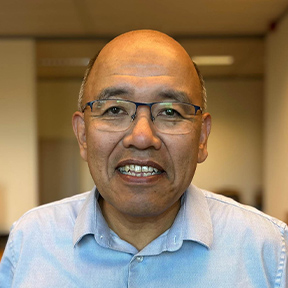
Wangpo Tethong* remembers Lhasang Tsering, who passed away just recently, for the remarkably cool-headed manner in which he steered the Tibetan Youth Congress (TYC) as its President when His Holiness the Dalai Lama made his Strasbourg proposal in 1988 of seeking genuine democratic autonomy and self-governance for Tibet in association with the People’s Republic of China, which was against the very grain of his passionate and the TYC’s fundamental position in favour of independence.
It was late in the night of June 14, 1988, in Geneva. Lhasang Tsering and I had checked into a cheap hotel room. All the while, I was wondering how I should justify giving Lhasang Tsering, the president of TYC, a copy of the Strasbourg Declaration, which the Dalai Lama was due to announce the following day in Strasbourg.
When I look back on that night and consider the extent to which Lhasang Tsering would shape the debate over Tibet’s future in the years that followed—a debate that shook the Tibetan exile community—I am struck by how quietly it all began.
In the preceding weeks, my task as a volunteer at the Tibet Office had been to enter corrections for the final printed version of the Strasbourg Declaration. And there were quite a few corrections. Kelsang Gyaltsen, then the Dalai Lama’s representative in Switzerland, had been charged with preparing the print of the declaration together with a small offset printing shop near the office, at Waffenplatz in Zurich. Before leaving for Geneva, I took a copy for myself. I can still vividly remember the elegant printing in pastel yellow. Kelsang Gyaltsen had chosen glossy paper.
Lhasang la’s face darkened as he read the text. There was no scene, however. He was simply glad to be able to see the document before its public announcement the next day. I suspect that made the unpleasant surprise somewhat easier to bear. Looking back, I believe the people responsible in the Kashag should have done a better job of preparing and informing the Tibetan organizations in advance.
Lhasang Tsering was visiting Switzerland at the invitation of the Association of Tibetan Youth Association in Europe (TYAE). Among other things, he wanted to meet representatives of the UN human rights bodies in Geneva and present a petition. At the time, I was president of the Association of Tibetan Youth in Europe, while Lhasang la was president of our associated/parent organization, the Tibetan Youth Congress (TYC) in India.
As I recall, the TYAE organized two trips for him to Europe and Switzerland. Kelsang Gyaltsen played a major role in this. In the early 1980s, he had been instrumental in bringing the two youth organizations together. My Tibetan colleagues in Switzerland were thrilled by their encounters with Lhasang Tsering and other TYC leaders such as Tashi Phuntsok, Tashi Namgyal, and others. But the truly exceptional figure was Lhasang Tsering. I was 25 at the time fascinated by this man. And I was not the only one.
He was extraordinarily well-read, direct, eloquent, and passionate. He could explain in detail the construction of bombs and what to pay attention to in mountain warfare. He laughed often, yet could become fiercely—though intelligently—outraged. He regularly recited poems by Omar Khayyam, the 11th-century Persian poet, and taught TYAE members his own Tibetan adaptation of “This Land Is My Land.” I never saw him as relaxed and happy as in those days.
The encounter with him left a lasting mark on the Tibetan youth in Switzerland. In 1989, the following year, the TYAE amended its statutes with an additional clause and positioned itself as an organization committed to Tibetan independence.
Meanwhile, in Geneva, we completed our visits to the United Nations and could hardly wait to return to Zurich. It was planned that the Dalai Lama would hold a press conference in Bern the day after his appearance in Strasbourg and then address the Tibetan community in Zurich.
In Bern, Lhasang la and I sat perhaps in the third or fourth row of the grand hall of the Hotel Schweizerhof.
His Holiness explained his proposal to the press. After nearly forty years, I can hardly remember the details of his remarks or even the appearance itself. What I do remember is how, after the event, he strode energetically toward the two of us and said in Tibetan, in a very forceful manner, something along the lines of:
“I have done what needed to be done. Now it is up to you to raise your voices!”
Lhasang la took it quite calmly. I sensed no resentment. Perhaps I am misinterpreting the scene. But one could certainly get the impression that a relationship of trust existed between him and the Dalai Lama, and that each understood his role. I, however, was speechless.
***
In a photograph currently circulating on social media, one can see Lhasang Tsering standing at a podium, while I am seated in the second row.
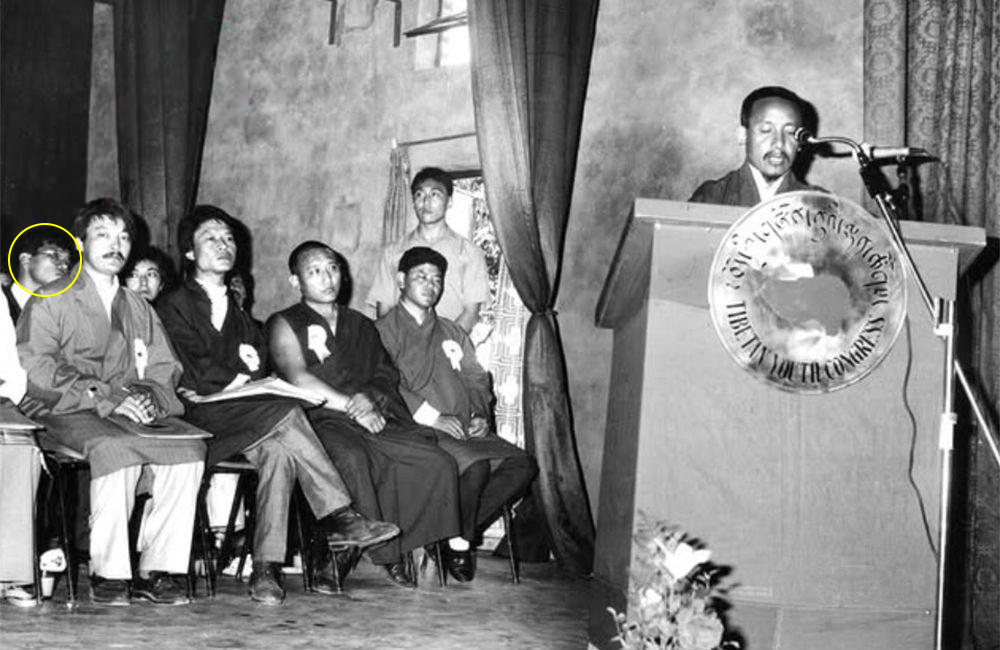
It was taken during a meeting of regional TYC chapters in the old hall of the Tibetan Institute of Performing Arts in Dharamsala. The picture shows that most participants were significantly older than I was. Very few were actually young people. Nevertheless, these men and women—some up to 45 years old—were active in the “Youth Congress,” which saw itself more as a social movement or political organization than as a youth association in the literal sense.
The meeting took place about five months after the Strasbourg Declaration. It was the first major gathering of a Tibetan exile organization following the Dalai Lama’s declaration that he was willing to forgo Tibetan independence if a genuine autonomy arrangement with Beijing could be achieved. The TYC could not avoid taking a position. The CENTREX, the executive committee of the TYC, arrived at the meeting with a largely finalized draft resolution. Even so, there was a long list of speakers and an equally lengthy debate.
In the lead-up to that meeting —where, to my knowledge, the TYC for the first time publicly opposed an idea put forward by the Dalai Lama—there had already been several heated public discussions.
The first took place just a few days after the night in Geneva and His Holiness’ appearance in front of the European parliament on June 15, 1988. In a small, stuffy back room of a restaurant in Kollbrunn, just before Rikon, our members crowded together. Gyari Rinpoche, then the foreign minister of the Tibetan government-in-exile, and Tenzin Geyche Tethong, the Dalai Lama’s private secretary, were the most senior representatives present. The Dalai Lama had instructed them to meet with us, the representatives of the youth organization.
Both officials were founding members of the TYC, and accordingly the discussion was very direct and frank. Those present were clearly in a state of considerable inner turmoil. Lhasang Tsering la handled himself remarkably well. It was a substantive discussion, and we were proud of him.
It could not be the role of the TYC to be tame. On the contrary, it would have been wrong to remain silent. The discussion was conducted with great seriousness and had little of the hostility that would come to dominate the debates of the 2000s. The arguments were largely free of ideology: How could these concessions be justified? Were they being made too early? Were they wise? Of course, there were also voices calling for unquestioning loyalty to the Dalai Lama. But nobody would have thought of turning the issue into a matter of conscience—asking whether one was for the Middle Way and therefore for the Dalai Lama, or against him. Had anyone tried, they would quickly have been told: “Please stick to the topic!”
I remember that much later Gyari Rinpoche suggested to us younger Tibetans that we play the role of moderate critics, but not go too far. My response was that we were not a dance troupe. Our position would have to be based on conviction and principle. There has long been an idea that some form of choreographed opposition within the Tibetan community might be useful. As is well known, this strategy failed completely in relation to the TYC and TYAE—and failed thoroughly. The Tibetan youth organizations became the favorite target of the ultra-conservatives, who finally had a pretext to pull their outdated ideas out of mothballs.
Few people today understand how things could spiral so far out of control. What is largely forgotten is that the term “Middle Way” appears neither in the Strasbourg Declaration nor in the Five Point Peace Plan. Only later did it become a political slogan within the Tibetan exile community—so influential that organizations and even innocent children are now named after it.
Lhasang Tsering led the TYC through this phase with great care. The resolution adopted by the TYC in 1988 stated that, as an organization committed to the goal of an independent Tibet, it rejected the Strasbourg Proposal but supported the vision of Tibet as a zone of peace outlined in the Five Point Peace Plan. That was a clever distinction and, in my view, remains a sustainable position to this day.
I long for that period. I think of Lhasang Tsering with great fondness. I wish that the kind of debates in which he played such a significant role could once again take place with the same quality today. Of course, that would mean venturing into unknown territory and being willing to question authority. That is not easy, and I do not deny that in later years he may occasionally have gone too far.
I vividly remember a woman in Kollbrunn who had only recently arrived from Tibet and who seemed somewhat uneasy about the intensity of our discussions. She warned us:
“A bow that is drawn too tight will break.”
The Lhasang Tsering I knew was one of those people who understood exactly how far a bow needed to be drawn—and how to make the arrow fly.
—
* Wangpo Tethong, Executive Director of International Campaign for Tibet Europe, has a master’s degree in history from University of Zürich and is the author of a book on Tibetan elites in Exile (Der Wandel in der politischen Elite der Tibeter im Exil: Integrations- & Desintegrationsprozesse in der politischen Elite). He has edited Bhod Shon, a Tibetan Youth Magazine; co-founded Tibetan student circles and the Tibetan Film Festival; and taken many other Tibet initiatives around the world, including the “Future of Tibet” conferences. He has worked with the Green Party (Zurich), Greenpeace Switzerland, and in campaign/communication roles for various Swiss NGOs. He was a member of the 15th Tibetan Parliament-in-Exile from Europe.