


OPINION
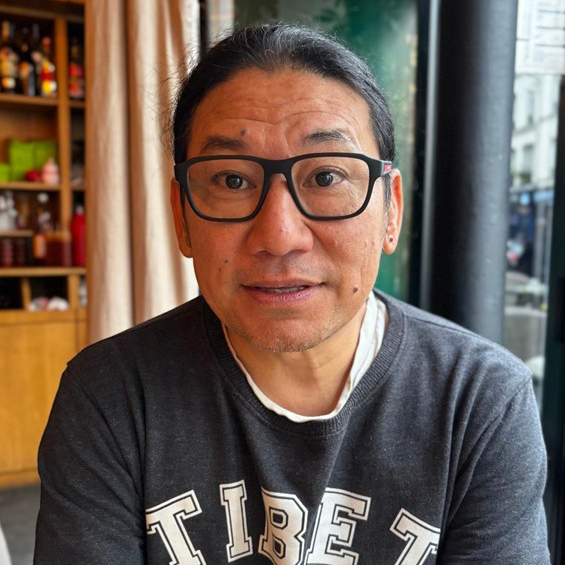
As exile Tibetans prepare to vote for a new executive head, the Sikyong, and a new parliament, Tenzin Namgyal* expresses concern over the invisibility of Rangzen candidates and asks: Why is advocating for independence treated as a political inconvenience rather than a legitimate platform?
The upcoming election in February 2026 for the Sikyong and the Tibetan Parliament-in-Exile is more than a procedural requirement. For me, it is a moment of deep and collective reflection. It is a mirror held up to our community, forcing us to ask: Who are we? Whose voices do we acknowledge in the community? And what type of future do we actually have the audacity to hope for?
For a people defined by occupation and exile, political pluralism is not a luxury but a survival strategy. Yet, as candidate lists are finalized and soft campaigns are launched, for me, there is a glaring, unsettling void. The invisibility of Rangzen candidates is not just a gap in the ballot but it is a crisis of representation that threatens the very health of our democracy.
The Tibetan democratic experiment or “the precious gift of democracy”, as it is often called, was intended to be a beacon, reflecting the entire political spectrum of a future Tibet. In this context, representation must move beyond symbolic inclusion; it must be a contest of substantive ideas. Democracy exists to ensure that disparate views, especially those rooted in convictions contrary to the dominant viewpoint are part of the discourse that forges our collective future.
Thus have I heard: The majority have the right to rule and the minority the right to be heard in democracy.
To strive for Rangzen is a legitimate political pursuit, not a whimsical one. It is deeply entrenched in the history of Tibetan sovereignty, the realities of ongoing occupation, and international legal principles. For many, the call for independence is a pragmatic assessment of reality: an understanding that expecting an occupying power to grant true freedom while maintaining the status quo is an exercise in futility.
Three generations of Tibetans have now been born and raised in exile. Unlike their predecessors, whose primary struggle was cultural survival, today’s youth are educated, globalized, and deeply engaged in international decolonial and indigenous sovereignty movements. They are not asking questions to be provocative; they are asking them because they understand the stakes.
They see a glaring contradiction: while the human rights situation inside Tibet deteriorates, the political discourse in exile remains static.
Why is advocating for independence treated as a political inconvenience rather than a legitimate platform?
When Rangzen candidates are invisible, the political aspirations of the youth feels relegated to the periphery.
This creates a dangerous estrangement. If our institutions are not responsive to the next generation, we risk a future where the youth are socially active but politically homeless.
There is an internal fear that openly supporting Rangzen harms our political standing or endangers those inside Tibet. This has led to an “internally stranded unity,” a fragile form of cohesion based on limited self-confidence and space to manoeuvrer. True, stable unity is not found in the absence of dissent, but in the strength of a community that can debate its future unencumbered. Unity is not uniformity.
Without ideological variety, the Parliament risks becoming an echo chamber. The global geopolitical landscape is in constant flux and to navigate it, Tibetans must be able to debate all possible pathways forward. Rangzen voices do not weaken our cause; they broaden its moral and political scope. As Aimé Césaire suggested, genuine liberation is not the result of timid self-imposition, but of courage.
Shadow Banning or Self-Censorship?
The absence of Rangzen voices is rarely the result of direct repression; it is managed through more discreet mechanisms of control. In the current exile discourse, a culture of “soft-silencing” has emerged. Proponents of Rangzen are often characterized as “emotional” or “divisive,” while those advocating for a conciliatory approach are branded as the only “rational” actors.
This false binary creates a self-censoring culture. Potential candidates are dissuaded from running, and activists quiet their convictions to remain “respectable.” When we narrow the field of acceptable ideas, the electorate is left with a hollowed-out choice. Eventually, this lack of variety becomes the new status quo and thus our democracy is the poorer for it.
The core issue is not whether Rangzen can be achieved tomorrow or the day after to me. It is whether we have the courage to let its advocates speak today. For the Tibetan Parliament-in-Exile to remain relevant, it must be a sanctuary for all political convictions, including the belief that full independence is the only path forward.
Elections should be an engine of hope, a time to dream big about our restoration as a nation. They should not be a mechanism for toning down our identity to avoid ruffling diplomatic or societal feathers. Rangzen is more than a political stance; it is a testament to our dignity and our refusal to be colonized by the expectations of others. When we shut these ideas out of the electoral process, we must ask ourselves: what kind of freedom for Tibet are we fighting if we are afraid to hear our own voices?
—
* Tenzin Namgyal – known as Tenam – was born in the Dhondenling Settlement in South India to Tibetan parents. After completing his studies, he held various roles in the Dharamsala-based Tibetan government in exile, notably as the editor of the “Tibetan Bulletin,” the official journal, for many years. He moved to France at the end of 2005 and has since worked as a board member of the Tibetan Community of France and various Tibet groups in France, and has been frequently invited to consult French lawmakers regarding Tibet. Tenam is an activist and has been one of the board members of Students for a Free Tibet France since 2012 and is a Steering Committee member of International Tibet Network – a global coalition of Tibet-related non-governmental organisations.