


As Penpa Tsering won re-election as the Sikyong (executive head) of the Central Tibetan Administration for another five-year term, Tenzin Jigmey* argues that one his central focuses should be to work towards “transforming our children into world-class entrepreneurs and innovators” for which purpose he suggests ways to give strategic priority to attaining expertise in Science, Technology, Engineering, and Mathematics (STEM) which future employment will demand.
This is a historic and hopeful moment for our community. The re-election of Sikyong Penpa Tsering demonstrates trust and unity among our people. With this renewed mandate comes increased responsibility. Of all the priorities before us, the future of Tibetan education is paramount. While I recognize the many responsibilities you bear as Sikyong, especially in political affairs and supporting the exile community, I believe that transforming our children into world-class entrepreneurs and innovators should be a central focus.
For more than six decades, our schools have protected what could not be taken from us: our language, our culture, our values, and our identity. (Tibetan Children’s Village: Preserving Culture in Exile, 2025) Institutions such as Tibetan Children’s Village have raised generations of students rooted in compassion, discipline, and cultural pride. (Dolma, 2025)
The world is undergoing rapid transformation. Fields such as artificial intelligence, biotechnology, renewable energy, robotics, and data science are reshaping global society. (The role of artificial intelligence in renewable energy development: Insights from less developed economies, 2025) Future employment will demand expertise in Science, Technology, Engineering, and Mathematics (STEM). (The importance of STEM: High school knowledge, skills, and occupations in an era of growing inequality, 2021) Without adequate preparation, we risk limiting our children’s opportunities and jeopardizing the long-term sustainability of our community. (Impact of Teacher Training on Student Learning Outcomes, 2023, pp. 1-10)
This is not a call to abandon tradition, but rather to strengthen it through innovation. Tibetans are recognized globally for their deep understanding of the mind and their altruistic perspective. Our intellectual heritage is grounded in inquiry, debate, logic, and disciplined reasoning, the very foundations of scientific thinking. STEM education aligns with these traditions and complements them. (Buddhist Logico-Epistemology, n.d.)
Over the next five years, I propose making STEM education a strategic national priority for Tibetan schools in India. This commitment should be championed by educational leaders, parents, monasteries, and alumni networks to ensure shared responsibility and community ownership. The Department of Education in Exile should collaborate with schools and local communities to develop projects that support future generations, with particular emphasis on long-term, sustainable initiatives led by alumni.
First, mathematics and science must be strengthened from the earliest grades. Language is integral to STEM, so both Tibetan and English should be included. Fostering curiosity is essential. For example, early-grade students could mix natural dyes from local plants to test for acidity and alkalinity, using litmus paper to observe color changes and record their findings. Laboratories should become environments where students investigate, experiment, and make discoveries independently, rather than relying solely on rote memorization. I believe STEM education can be objectively taught based on these three Key Points.
The Importance of STEM for Tibetan Students:
1. Academic Competitiveness: Students with STEM knowledge gain access to advanced studies and scholarships in India and abroad.
2. Problem-Solving Skills: STEM encourages inquiry, experimentation, and logical reasoning, skills that complement traditional Tibetan debate and analysis.
3. Economic Independence: STEM skills open pathways to technology, engineering, healthcare, and research careers, reducing reliance on traditional community funding.
Second, while the curriculum aligns with the Indian Board of Standards, it is essential to assess how actively students engage in coding and computational thinking. Students should not only use technology but also develop the skills to create it. Given the rapid pace of technological change, teaching methods must adapt to prepare students for the future. I recommend addressing these changes directly with students to foster critical thinking and adaptability. It is important to note that traditional software engineering and computer science courses are also becoming less effective as fast-track pathways.
My take on Coding and Computational Thinking
• Introducing Scratch for beginners in early education as a club or curriculum.
• Transition to Python and JavaScript in higher grades
• Encourage students to create simple apps or digital games related to Tibetan culture.
Example Project: Students design a digital map of Tibetan settlements or monasteries using basic coding skills.
With coding and technology skills, students should understand the distinction between artificial intelligence (AI) studies and software-related projects. AI technology primarily involves machine learning, deep learning, and natural language processing (NLP).
Third, investment in teacher development is essential. Educational reform depends on empowered and well-prepared teachers. In STEM education, it is crucial that teachers hold appropriate credentials and demonstrate a passion for educating students through research and innovative methods. Evidence from other countries shows that annual STEM training and institutional
partnerships can significantly improve instructional quality in schools. (Zhou et al., 2023)
My suggestion is to take on teacher training and capacity building
• Mandatory annual workshops in STEM pedagogy
• Online certifications in coding, robotics, and lab safety
• Partnerships with universities for mentorship
• Incentives for teachers who implement student-led projects
Fourth, it is necessary to establish innovation spaces, maker labs, robotics centers, and environmental research programs. These facilities will enable students to design solutions for Himalayan sustainability, climate monitoring, and the scientific study of Tibetan medicinal plants.
Robotics and engineering are now integral to daily life. (The Impact of Early Robotics on Kindergarten Children’s Self-Efficacy and Problem-Solving Abilities, 2025) I propose several practical strategies for implementing these disciplines within school campuses.
• Use Arduino or Raspberry Pi kits for hands-on learning. These are handy and easy to use.
• Teach sensor programming, circuits, and basic robotics
• Organize annual inter-school robotics challenges
Example Project: Students design a small robot to monitor soil or water conditions in the Himalayas, combining environmental science with engineering.
Tibetan Medicine Research Integration: Our schools currently do not address this despite its long history. It is essential to educate students about this important aspect of our heritage. (Pordié & Blaikie, 2014, pp. 340-368)
• Research projects on medicinal plants
• Simple chemical analysis in school labs
• Collaboration with Tibetan medicine scholars
Example Project: Students test plant extracts for antioxidant activity using safe laboratory procedures, linking traditional medicine with modern science.
Fifth, while developing STEM-ready school infrastructure is important, it is equally crucial to make better use of existing spaces. To implement STEM education, Tibetan schools require the following resources:
• Fully equipped science laboratories for physics, chemistry, and biology.
• Computer labs with coding and robotics resources.
• Innovation centers or maker spaces for practical experimentation.
• Trained teachers capable of guiding students in inquiry-based learning.
• Inquiry-based projects rather than rote experiments
• Encourage student-designed mini-research projects
Example Project: Test the water quality of local rivers or study plant growth under different Himalayan soil conditions
While resource constraints pose challenges, phased implementation and strategic partnerships with Indian universities, NGOs, and technology companies can make STEM education accessible to all Tibetan schools. (Bridge STEM | Tibetan Science Education Project, 2023)
To my fellow Tibetans, envision our youth developing renewable energy models for mountain communities. Imagine students digitizing ancient manuscripts with modern technology. Picture our graduates entering top universities not only as cultural scholars, but also as engineers, scientists, and innovators. Achieving this transformation will require careful planning, sufficient funding, and collective unity. Our greatest asset remains a community that values education as the foundation of survival.
Sikyong Penpa Tsering’s new term offers five years of stability and leadership. Let us ensure this period is remembered as the era when Tibetan education entered a new phase, integrating tradition with technological advancement. We must build a generation rooted in Tibetan values and prepared for the global stage. Drawing on my 11 years of STEM education experience in an American school, I offer these suggestions for our future generations. If I can help even one Tibetan succeed, that will fulfill my purpose in writing this paper. My focus remains on policy-based discussion.
Conclusion
By building on tradition and embracing innovation, Tibetan schools can create a distinctive educational model that balances cultural identity with scientific competence. STEM education is essential for Tibetan youth to thrive academically, economically, and socially in the 21st century. (Cao et al., 2025) Investing in STEM today enables Tibetan students to preserve their heritage while actively participating in a technologically advanced world. This is an investment in identity, opportunity, and the future of our community.
References
1. (November 3, 2025). Tibetan Children’s Village: Preserving Culture in Exile. Georgia Public Broadcasting. https://www.gpb.org/news/2025/11/04/the-dalai-lama-created-tibetan-capital-in-exile-in-india-its-shrinking
2. Dolma, Y. (October 22, 2025). Tibetan Children’s Village School celebrates its 65th founding anniversary. Tibet Post International. https://www.thetibetpost.com/news/exile/tibetan-children-s-village-school-celebrates-65th-founding-anniversary
3. (2025). The role of artificial intelligence in renewable energy development: Insights from less developed economies. Energy Economics 146. https://doi.org/10.1016/j.eneco.2025.108551
4. (2021). The importance of STEM: High school knowledge, skills and occupations in an era of growing inequality. Research Policy 50(7). https://doi.org/10.1016/j.respol.2021.104249
5. (2023). Impact of Teacher Training on Student Learning Outcomes. International Journal of Education and Practice 10(6), pp. 1-10.
6. https://doi.org/10.54417/ijep.v10i6.1234 (n.d.). Buddhist Logico-Epistemology. Wikipedia. https://en.wikipedia.org/wiki/Buddhist_logico-epistemology
7. (2025). The Impact of Early Robotics on Kindergarten Children’s Self-Efficacy and Problem-Solving Abilities. MDPI 15(11). https://doi.org/10.3390/educsci15111436
8. Pordié, L. & Blaikie, C. (2014). Knowledge and skill in motion: layers of Tibetan medical education in India. Cult Med Psychiatry 38(3), pp. 340-368. https://doi.org/10.1007/s11013-014-9389-4
9. (2023). Bridge STEM | Tibetan Science Education Project. Bridge STEM. https://www.bsyouth.com/
—
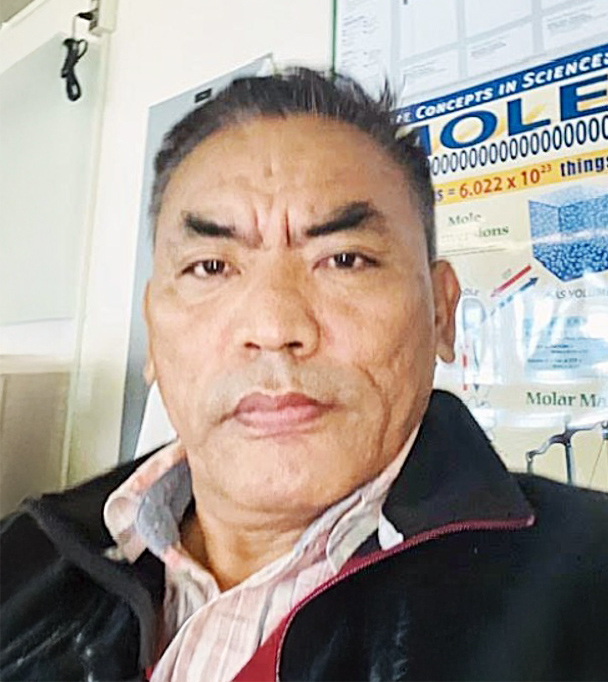
* Tenzin Jigmey is presently a high school chemistry teacher and an adjunct lecturer at Union County College in New Jersey. With years of experience in both education and laboratory work, he brings a unique perspective as someone who has journeyed from the Tibetan exile school system to the American education system. His reflections draw on his personal experiences as a student, teacher, and community member dedicated to education and growth.
Contact email: jigme1959@gmail.com