



Tsering Passang*, the son of a Tibetan resistance veteran, writes from London on the recent recognition of former freedom fighters in Dharamsala, Britain’s historic ties with Tibet, and the duty of the diaspora and democratic nations to carry the Tibetan cause forward.
From London, Dharamsala can seem very far away. But for Tibetans in exile, it is never just a hill town in northern India. It is the political and spiritual headquarters of a displaced nation, where memory, grief, resistance and hope continue to meet.
The recent Tenshug, or long-life prayer offering, for His Holiness the Dalai Lama on the occasion of his 90th birthday, made by veteran Tibetan freedom fighters, was one such moment. It was an act of deep devotion; but it was also a reminder that Tibet remains an unresolved international issue.
I arrived in the United Kingdom from Lodrik Jampaling Tibetan Refugee Camp in 1996 on a scholarship programme and, to the best of my knowledge, was the first child of Lodrik veterans to do so. Thirty years later, I still carry the stories of those resistance fighters into conversations with politicians, officials, diplomats, lawyers, journalists and human rights advocates. I do so through meetings, writing and public engagement, because Tibet’s plight must remain visible. The recent gathering in Dharamsala brought home, once again, that Tibet’s struggle is not over, and that the responsibility of remembrance now rests heavily on those of us in exile.
That responsibility is personal. I carry the legacy of my father and the Lodrik veterans of his generation – men whose lives were shaped by sacrifice, discipline and an unbroken belief that Tibet’s independence was real, and that its loss was neither inevitable nor legitimate. Their testimony, and the stories I heard growing up in the refugee camp in Nepal and later in exile communities, have long reminded me that the United Kingdom has a historical relationship with Tibet that Beijing’s narrative cannot simply erase. I live not far from Woolwich, home to the Royal Military Academy and the Royal Arsenal, where two of the four young Tibetan students sent by the 13th Dalai Lama to England in 1913 received part of their military training with British support in the years that followed.
As part of my advocacy work through the Global Alliance for Tibet & Persecuted Minorities, I helped secure the return of the 1947 letters from the young 14th Dalai Lama and his Regent to Sir Basil Gould, the former British Political Officer for Bhutan, Sikkim and Tibet, who attended the Dalai Lama’s enthronement ceremony in 1940 as the British government’s official representative.
These letters, which reflect Tibet’s outreach to the United Kingdom, led to the official Tibetan Trade Delegation of 1948, headed by Tibetan Finance Minister Tsepon W.D. Shakabpa, who met the British Prime Minister Clement Attlee at 10 Downing Street in London. The letters were presented to the Tibet Museum and formally received by Sikyong Penpa Tsering, President of the Central Tibetan Administration, in late June 2025.
I was invited to witness the handover at the Office of Tibet in London, alongside the Dalai Lama’s Representative, Sir Basil Gould’s granddaughters, and a senior Bonhams executive. Bonhams and Sir Basil Gould’s family did the right thing in ensuring that these items were withdrawn from public auction and returned to the Tibetan people, preserving an important historical record of Tibet’s status before the Communist Chinese occupation.
That mattered because history matters. Tibet is not a footnote to Asian geopolitics. It is a question of law, memory, diplomacy and unfinished responsibility.
What happened in Dharamsala recently was more than a prayer gathering. It was also a symbolic passing of responsibility from one generation to the next.
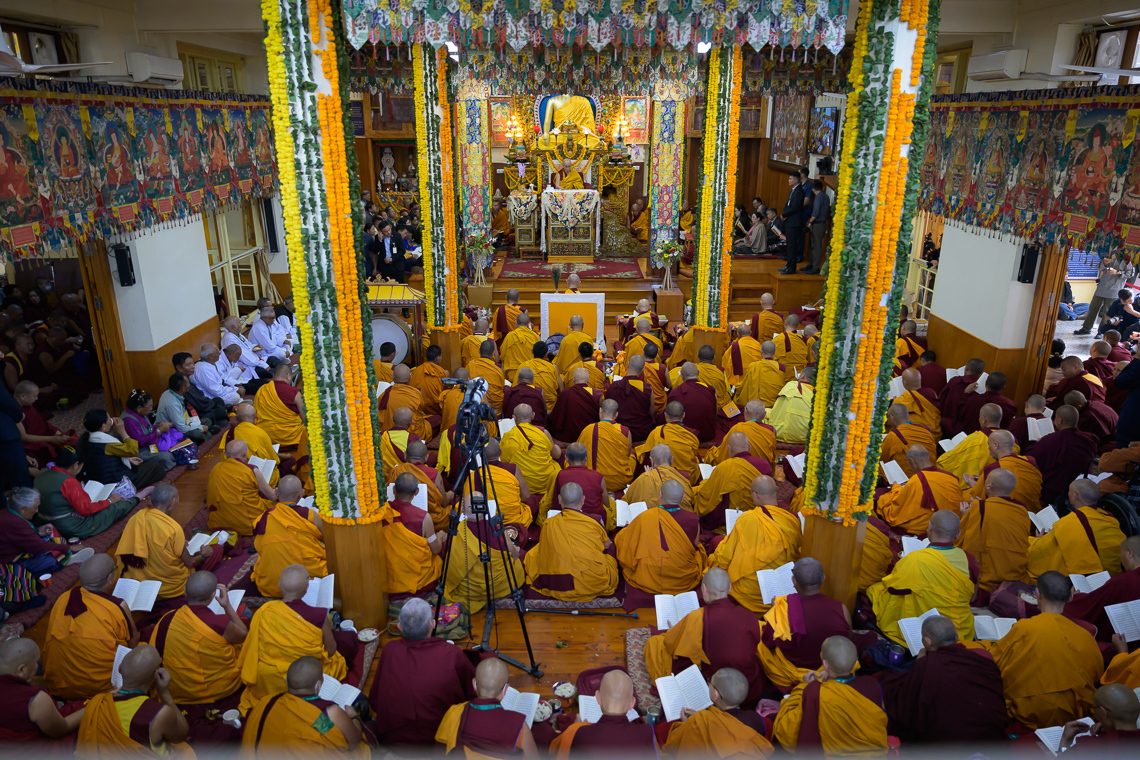
The Tenshug, organised by the Dhasa Dhotoe Welfare Society and the Lodrik Welfare Association, honoured the Dalai Lama, the 1989 Nobel Peace Prize laureate, and prayed for his long life in the service of humanity. But it also sent a clear message: Tibetans, despite occupation, exile and political repression, have not surrendered their identity or their demand for justice. As His Holiness entered the Tsuglagkhang amid prayer, song and the Tashi Shölpa dance, the message was unmistakable: Tibet remains present, remembered and unyielding.
The White Tara prayers were more than a religious ritual. They were an act of remembrance.
For many Tibetans, the presence of Lodrik veterans and their families in Dharamsala carried deep significance. Lodrik is more than a Mustang-based veterans’ organisation. It forms part of a wider history of Tibetan resistance stretching from eastern Tibet to India and Nepal. Between 1960 and 1974, Tibetan resistance fighters regrouped there and continued their struggle after much of the world had stopped paying attention. My father was among them.
He never told the full story. Like many of his generation, he carried it in silence. But I grew up among his comrades in Lodrik Jampaling Tibetan Refugee Camp: men and women from Amdo, Kham and Ü-Tsang who had lived through conflict, exile, loss and betrayal. In the early 1990s, I worked with some of them in a woollen yarn store that supported families in the camp. Their hands bore the marks of lives shaped by mountains crossed, comrades lost, and a homeland denied. Many of those remarkable men and women are no longer with us, but I think of them often.
So when I watched several hundred Tibetan resistance fighters and veterans’ families gather in Dharamsala, I saw more than a reunion. I saw a community refusing to let its history be erased.
Many of these veterans are now in their 80s and 90s. They fled with little and endured imprisonment, displacement, separation, surveillance and decades of uncertainty. Yet their legacy is defined not by bitterness, but by discipline, dignity and purpose.
That is what makes Tibet’s story so difficult for the world’s easy cynicism to absorb.
The two-day Conclave of Tibetan Freedom Fighters, held on 24 and 25 April and organised by the Department of Security of the Central Tibetan Administration, made clear that these men and women are not merely symbolic figures. They are participants in history. Veterans of Chushi Gangdruk, Lodrik guerrilla fighters, former soldiers of an independent Tibet, members of the Special Frontier Force and more recent freedom activists from Tibet gathered not to be reduced to nostalgia, but to be honoured with dignity as witnesses to a continuing struggle. Medals were presented to recognise their service and to remember those who died in the service of their peaceful nation, which remains under foreign occupation.
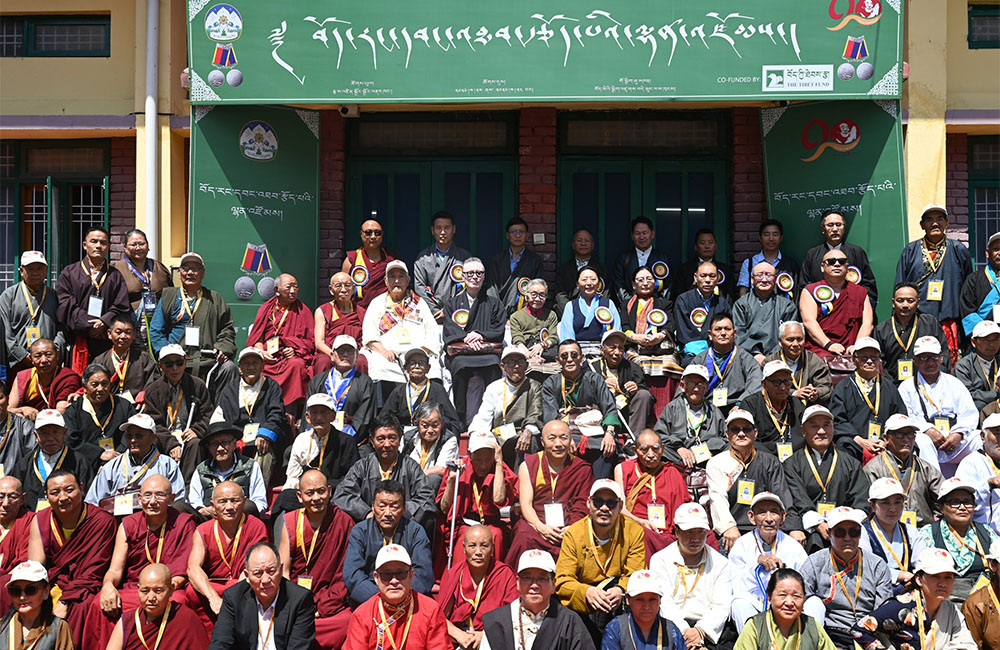
The Central Tibetan Administration’s Department of Security deserves credit for organising this pivotal Tenshug and the wider gathering of Tibetan veterans during His Holiness the Dalai Lama’s 90th birthday year, which the CTA has designated the ‘Year of Compassion’. The occasion should do more than commemorate the past. It should strengthen Tibetan unity, reinforce shared purpose and renew commitment to the central cause of freedom and justice for Tibet.
For those watching from London or elsewhere, Dharamsala is not a remote ceremonial stage. It is a reminder that history remains unfinished, and that a powerful state continues to bully a peaceful people. Many Tibetans in exile did not fight in Mustang or cross the Himalayas under fire. But we inherit the duty to preserve memory, sustain advocacy and continue the struggle in new forms.
The Tibetan cause has not ended. It has changed. It has entered a new phase. But it has not disappeared, and it will not disappear so long as repression continues in Tibet and memory remains alive in exile.
To the authorities in Beijing, the message is simple: time does not erase truth, and age does not cancel injustice. The men and women who once fought with arms may be nearing the end of their lives, but the cause they defended continues in exile communities, monasteries, advocacy networks, youth movements and among all those who refuse silence.
This is not only about Tibet. It is about the right to live without fear, the right to dignity and the right of a people to remember who they are without punishment. That is why Tibet’s struggle is linked to the suffering of others under authoritarian rule, including practitioners of Falun Gong, the people of Hong Kong and countless ordinary Chinese citizens whose lives are constrained by the same machinery of repression.
When I watched these elders gather in Dharamsala, I did not see an ending. I saw the transfer of a burden and a duty: from those who resisted on the battlefield to those of us who must now resist through memory, advocacy and truth.
For Britain, sympathy is no longer enough. This country has a real history with Tibet, and that history brings responsibility. The United Kingdom should acknowledge its ties to Tibet honestly, speak with greater clarity about repression in Tibet, defend religious freedom and human rights in Parliament and in diplomacy, and support sustained international scrutiny rather than episodic expressions of concern. If London truly believes in a rules-based international order, then Tibet cannot be treated as a marginal issue to be raised only when convenient. Britain should make clear that trade with China will not buy silence on matters of conscience, historical truth and the rights of an occupied people. That would send a message not only to Beijing, but also to the international community and to Tibetans in exile, as well as those in China’s occupied Tibet: that memory will not be intimidated, and principle will not be quietly traded away.
The Tibetan story is not fading. It is being carried forward in prayer halls, refugee settlements, family memories, diaspora communities, acts of witness and voices that refuse to be silenced. The veterans have done their part. Britain, the democratic world and the Tibetan diaspora must now do theirs.
—
* Tsering Passang, a Tibetan blogger, is the founder-chair of the London-based Global Alliance for Tibet & Persecuted Minorities.