


OPINION
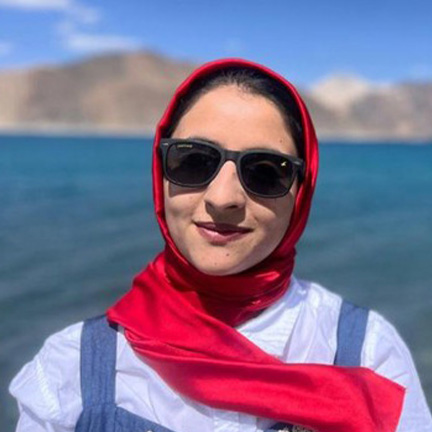
Ifrah Khalil Kawa* explores how artificial intelligence is reshaping the preservation and transmission of Tibetan cultural memory across generations in exile, while also reflecting on the ethical questions surrounding digital archives, cultural stewardship, and community ownership of memory.
In the Sonamling Tibetan Settlement outside Leh in Ladakh, I found that the most venerable memories were not to be had in any museum or archive. They were to be found in conversation. My fieldwork there put me in the company of elderly Tibetan refugees who would talk of the monasteries from their youth, the villages they put behind them and the Himalayan crossings that altered the course of their lives. Younger members of the family would be seated about them, keenly listening. Now and then, one might subtly raise a mobile phone to put the exchange on record. An unremarkable thing to do, perhaps, but with no small import. In a sense, these were more than family tales, they were pieces of a homeland being put aside for the keeping of those who have never set eyes on it.
For Tibetans in exile, memory is never just an act of recollection, it is how culture endures. Before such things ever made it into an institution’s files, they made their way through the home and the prayer hall, in song and in the ordinary course of talk, conveying language and faith and an abiding connection to Tibet over the years.
There is a greater urgency to this now. The generation that can speak from experience of pre-1959 Tibet is aging. Most of them were barely 10 years old or younger when they fled from Tibet to India. What was once the stories of community gatherings and the dinner table conversations is increasingly in the hands of the children and grandchildren of the diaspora in India and beyond. For them, Tibet is known by what has been handed down in photographs, keepsakes and ritual rather than by direct encounter. Marianne Hirsch, the literary scholar, calls it postmemory which translates to an inheritance so profound it defines one’s identity even if the memory is not one’s own.
Across the Tibetan diaspora, preserving these inherited memories has become a collective effort. Libraries safeguard manuscripts, museums preserve material culture, monasteries continue religious traditions, schools teach Tibetan language and history, and community organisations record oral testimonies before they disappear. These institutions do more than store information. They ensure that memory remains part of everyday life rather than becoming a distant historical record.
Artificial intelligence is now beginning to transform this landscape of remembrance. Interviews that once required days or weeks to transcribe can now be converted into searchable text within minutes. Fragile photographs can be digitally restored. Tibetan-language recordings can be transcribed and translated with increasing accuracy. Large collections of documents can be organised in ways that make them accessible to young Tibetans living thousands of kilometres away from one another.
These developments hold enormous promise. For a dispersed community, AI offers opportunities to preserve voices that might otherwise be lost. A grandchild growing up in Delhi, Toronto, or Zurich may one day listen to an elder describing a village in Tibet, search family archives in both Tibetan and English, or discover historical materials that were previously difficult to access. Technology can shorten the distance between generations and help sustain cultural memory in ways earlier generations could scarcely have imagined.
Yet preservation is never simply a technical process. Every archive reflects decisions about what is collected, how it is organised, and whose stories receive attention. Artificial intelligence introduces another layer of decision-making. Algorithms determine what becomes searchable, how information is categorised, what translations are produced, and sometimes even how stories are summarised. These choices are not neutral. They shape the historical record that future generations will encounter.
For Tibetans, this raises important ethical questions. Who owns digitised memories? Who should decide how oral histories are translated or interpreted? Can an algorithm recognise the cultural and spiritual meanings embedded in a prayer, a place name, or a family photograph? Most importantly, how can communities ensure that new technologies strengthen rather than replace the human relationships through which memory has always been sustained?
Anthropologist Carole McGranahan has written that exile is not simply about displacement but about continuing to live, remember, and imagine collectively across generations. Artificial intelligence should be understood within that tradition and not as a replacement for memory, but as another tool through which communities may choose to preserve it. Used responsibly, AI can support the remarkable work already being carried out by Tibetan families, archivists, educators, monasteries, museums, and cultural organisations. Used carelessly, it risks reducing complex histories to searchable data while overlooking the relationships and lived experiences that give those histories meaning.
The future of Tibetan memory will therefore depend on more than technological innovation. It will depend on ensuring that the authority to remember remains with the communities who have carried those memories across decades of exile. Artificial intelligence can preserve voices, restore photographs, and organise archives. But it cannot inherit loss, sustain tradition, or understand belonging on its own. Those responsibilities remain profoundly human. For a people whose homeland continues to live in memory as much as in geography, the greatest challenge is not whether AI can remember Tibet, but whether it can help future generations remember Tibet in ways that remain faithful to the people whose stories it seeks to preserve.
—
* Ifrah Khalil Kawa is a researcher in Peace and Conflict Studies from Kashmir. Her work focuses on memory, displacement, religion, and identity across the Himalayan borderlands, with particular research interests in Tibet, Kashmir, and the politics of cultural memory. She has conducted ethnographic fieldwork among Tibetan communities in India, and her writing has appeared in publications including Al Jazeera and Frontline.