


OPINION
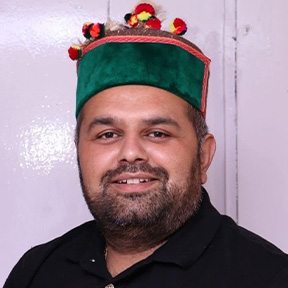
While the Dalai Lama succession question sits right at the center of China’s quest to redefine and remake Tibet in its own image, spiritual legitimacy can’t be granted by government order; states can compete for influence, but the next Dalai Lama’s real authority will come from the Tibetan Buddhist community and the wider Buddhist world, writes Saurabh Chauhan.*
Every time the Dalai Lama appears in public these days, there’s this quiet question hanging in the air. You hear it in monasteries, in conversations among Tibetans and in diplomatic backrooms across Asia: what happens when he’s gone?
His 91st birthday celebrations in Leh this July felt both joyful and heavy. Thousands came for the prayers, the traditional dances, the long-life ceremonies. There was real warmth in the air, but underneath it all was the awareness that the institution he’s carried for over six decades is heading toward a crossroads. The question of the 15th Dalai Lama isn’t just a religious matter anymore. It’s become one of the bigger geopolitical issues in Asia, tangled up with legitimacy, cultural survival, sovereignty and the future direction of Tibetan Buddhism.
At its heart, this isn’t only about India versus China. It’s about two very different ways of thinking about authority.
India’s position comes from deep history, civilizational continuity and the simple fact that Buddhist traditions still thrive freely on its soil. China’s comes from state power, economic leverage and a growing push to mold Tibetan Buddhism to fit political needs. The succession will show which approach actually resonates with the wider Buddhist world.
The difference starts with basic history. Buddhism was born in India. Siddhartha Gautama reached enlightenment at Bodh Gaya, gave his first sermon at Sarnath and passed into Mahaparinirvana at Kushinagar. Before it spread across Asia, its intellectual heart was places like Nalanda, where monks and scholars from many lands debated philosophy, logic, medicine, astronomy and ethics with real openness.
Even the Chinese monk Xuanzang made that long, dangerous journey to India centuries ago — not because India was the strongest empire, but because it was the center of Buddhist learning. Nalanda’s strength was never raw power. It was intellectual authority, debate instead of decree, inquiry instead of control. That difference still matters a lot today.
India’s real advantage isn’t just that Buddhism started here. It’s that the country still offers space where Theravada, Mahayana and Vajrayana traditions can exist side by side without the government stepping in to decide theological questions. From Bodh Gaya and Sarnath to Dharamshala, Ladakh, Spiti, Sikkim and Tawang, you see living Buddhist communities shaped by centuries of exchange rather than top-down rules.
No other place has that combination. The land of the Buddha is also the place that has sheltered the largest Tibetan Buddhist community in exile for more than sixty years.
Modern India has tried, with mixed results, to reconnect with this past. Reviving Nalanda University was about more than building a campus — it was an attempt to reclaim that old role as a hub for Buddhist scholarship. Projects like the International Buddhist Confederation, the Buddhist Circuit and sharing sacred relics with countries such as Thailand, Vietnam, Mongolia and Sri Lanka point in the same direction. The Piprahwa relics exhibition earlier this year, pulled back from auction, carried real meaning. It was India stepping up as custodian of something ancient and shared.
But India’s biggest contribution since 1947 hasn’t been monuments or exhibitions. It’s been protecting a living tradition.
When the Dalai Lama crossed into India in 1959, he brought with him not just his own presence but an entire endangered civilization. India gave him and thousands of other Tibetans a safe place despite the diplomatic costs. Over the decades, they rebuilt monasteries, schools, libraries and cultural life in the Himalayas and beyond. Dharamshala became much more than an administrative headquarters — it turned into the main intellectual and spiritual home for Tibetan Buddhism in exile. Ancient texts were safeguarded, philosophical lineages continued and new generations grew up rooted in their language and faith while still engaging the modern world.
A huge part of Tibetan Buddhism’s global reach today grew out of this Indian chapter. From Dharamshala, the Dalai Lama spoke to scientists, philosophers, politicians and young people everywhere. His focus on compassion, non-violence and dialogue made him one of the most respected moral voices on the planet.
That’s the kind of authority you earn, not buy with projects or forums.
China’s approach is built on something else entirely. The Communist Party is officially atheist, yet it claims the right to regulate reincarnations in Tibetan Buddhism. The 2007 rules require government approval for “living Buddhas,” and Beijing keeps bringing up Qing-era practices like the Golden Urn to justify its role.
The contradiction stands out. When the Dalai Lama recognized a six-year-old as the 11th Panchen Lama in 1995, the boy and his family disappeared. They haven’t been seen publicly since. China installed its own candidate, who mostly appears at official events. For many Tibetans and Buddhists worldwide, that episode seriously damaged Beijing’s claim to be any kind of guardian. It highlighted the fear that political power was overriding religious tradition.
Those worries have only grown. Under “Sinicization,” monasteries face tighter oversight, religious education is more controlled and Tibetan language use has faced new limits in some areas. The big boarding school programs have pulled many children away from their cultural roots. Even the push to use “Xizang” instead of Tibet feels to many like rewriting the story.
So the succession question sits right at the center of all this.
In 2025 the Dalai Lama made it clear the institution would continue. He also said the Gaden Phodrang Trust — his own office — has the sole authority to recognize the next one, following long Tibetan Buddhist traditions. No government gets a say. That statement directly pushes back against Beijing’s position. It sets up two different sources of legitimacy: one rooted in religious custom, the other in state power.
Throughout Buddhist history, legitimacy has rarely come just from rulers. Kings supported monasteries, but they didn’t usually pick reincarnations or define doctrine. That role belonged to respected lineages and the faith of the people. That old pattern could prove important when the time comes.
China has put serious resources into Buddhist diplomacy — the World Buddhist Forum, temple restorations, networks across Southeast Asia tied to Belt and Road. It’s smart, well-funded work aimed at building influence. But influence and real legitimacy aren’t always the same thing. A monastery might accept funding. A government might value economic ties. Recognizing a spiritual leader, though, is ultimately a matter of faith and community acceptance.
This is where India’s role stands out.
India holds not only Buddhism’s holiest sites but also the institutions that have kept Tibetan Buddhism alive in exile for decades. Dharamshala, Bylakuppe, Mundgod, Tawang, Ladakh, Spiti — together they form the biggest network of Tibetan Buddhist life outside Tibet. They’re places where traditions continue without state interference in core matters of faith.
Tawang especially stands out, with one of the largest monasteries and deep links to the Sixth Dalai Lama. Its religious importance goes hand in hand with its place in today’s strategic realities between India and China.
India hasn’t always made the most of this inheritance. Some pilgrimage sites still need better facilities. Buddhist tourism could be much bigger. Coordination between culture, academia and diplomacy sometimes feels uneven. But the core strength is real.
India’s edge isn’t about matching China project for project. It’s credibility. It’s being the land of the Buddha while also sheltering the Dalai Lama, the Tibetan administration and thriving monastic centers. It’s protecting a tradition without trying to rewrite or control it.
The debate over the next Dalai Lama goes far beyond one office. It’s about whether an ancient spiritual path keeps the freedom to choose its own direction, or whether governments get to decide.
Nearly a thousand years ago, scholars traveled huge distances to Nalanda because wisdom, not power, drew them. That same spirit helped carry Buddhism from India to Tibet and across Asia. Today Dharamshala has played a similar role — keeping the intellectual and spiritual heart beating in exile.
History can’t be manufactured through rules. Spiritual legitimacy can’t be granted by government order. States can compete for influence, but the next Dalai Lama’s real authority will come from the Tibetan Buddhist community and the wider Buddhist world.
For more than six decades, India has given Tibetan Buddhism something deeper than patronage. It has given space, dignity and continuity. In doing so, it hasn’t just helped a people in exile — it has helped protect one of humanity’s great spiritual traditions. If India keeps nurturing that with seriousness and confidence, the spirit of Nalanda won’t just be history. It can still shape the future of Buddhism. For India, this is both an opportunity and a responsibility worth carrying.
—
* Saurabh Chauhan is a journalist and independent researcher based in Himachal Pradesh. He spent nearly eight years with Hindustan Times, reporting from Shimla, Chandigarh and Lucknow, where he covered a wide range of political, social and environmental issues. His work has also appeared in platforms such as The Print, BBC Hindi, Firstpost and several other publications. Currently working independently, Chauhan is engaged in long-form research and writing. He is authoring a forthcoming book, Prayer Wheels in the Cloud, which explores the future of Tibetan culture, religion and political struggle through the lens of technology and a rapidly changing world.