


OPINION
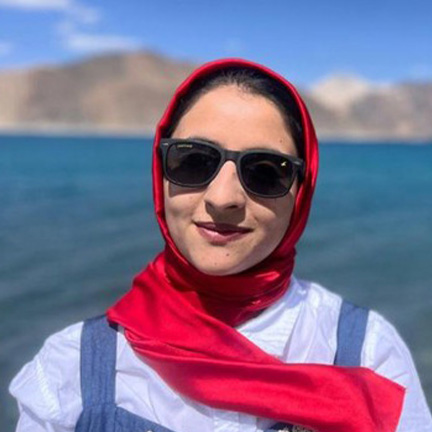
In the backdrop of the recent cancellation of the International Association for Tibetan Studies (IATS) conference, which was scheduled to be in Kathmandu over Aug 23-29, Ifrah Khalil Kawa* reflects on how contemporary geopolitical power increasingly extends beyond territorial control to shape academic spaces and the production of knowledge. Drawing on the ideas of Michel Foucault and Antonio Gramsci, alongside her fieldwork in Ladakh, Ifrah Khalil argues that the politics surrounding Tibet today must also be understood through the politics of knowledge and academic freedom.
The cancellation of the 17th Seminar of the International Association for Tibetan Studies (IATS) in Kathmandu should concern far more than researchers working on Tibet. For most people, it may appear to be little more than the postponement of an academic conference. Yet academic conferences are not ordinary events. They are spaces where new research is debated, young scholars meet senior academics, collaborations emerge and future directions of a field are shaped. When organisers announced that the conference had been cancelled after senior Nepali officials requested that it not proceed, reportedly following diplomatic concerns raised by China, what was interrupted was not merely a week of presentations. It was the temporary closure of one of the few international spaces where Tibet could be studied collectively, critically and across disciplinary boundaries.
The significance of this moment extends well beyond Nepal. Contemporary discussions of Tibet often focus on territory, sovereignty and diplomacy. We measure geopolitical power through military deployments, infrastructure projects or economic influence. Yet the Kathmandu episode reminds us that power also operates in quieter ways. It determines which conversations take place, which archives remain accessible, which histories receive attention and, perhaps most importantly, which forms of knowledge are allowed to circulate. The struggle over Tibet is therefore not only territorial. It is also epistemic. It concerns the conditions under which Tibet itself can be studied.
Michel Foucault famously argued that power does not simply repress knowledge; it produces and regulates it. Institutions determine what becomes accepted as legitimate knowledge, whose voices are heard and which narratives acquire authority. Academic conferences occupy an important place within this process. They are not merely venues where completed research is presented. They are sites where knowledge itself is produced through debate, disagreement and collaboration. To interrupt such a gathering is therefore not only to cancel an event. It is to reshape, however subtly, the intellectual environment in which future scholarship develops.
This became particularly meaningful to me during my own fieldwork in Ladakh. Some of the most valuable insights I encountered did not emerge from archives or policy documents but from conversations over butter tea, shared meals and long discussions with people whose knowledge rarely appears in academic texts. Changpa pastoralists explained the changing seasons not through meteorological forecasts but through the emergence of marmots after winter. Traders in Leh recalled commercial relationships that had connected Ladakh to Tibet, Yarkand and Kashmir long before contemporary borders divided the region. These encounters reminded me that knowledge about the Himalayas is often lived before it is written. Academic spaces matter because they create opportunities for these everyday forms of knowledge to enter wider intellectual conversations.
This is precisely why the cancellation of the IATS seminar cannot be dismissed as an unfortunate administrative decision. Since its founding in 1979, the International Association for Tibetan Studies has been one of the few dedicated spaces where scholars from across the world gather to exchange research on Tibetan history, language, religion, literature, politics and society. These meetings do more than showcase completed work. They shape the future of Tibetan studies itself. New collaborations are born, doctoral students find mentors, archives are reinterpreted and competing perspectives are debated. When such a space is interrupted, what is lost is not only a conference but a vital arena through which knowledge about Tibet continues to evolve.
The significance of this loss becomes clearer when viewed through the lens of hegemony. Antonio Gramsci argued that enduring power is rarely maintained through coercion alone. It is sustained by shaping institutions, public discourse and the boundaries of what comes to be accepted as legitimate knowledge. Universities, archives, museums and academic conferences are therefore never politically neutral spaces. They influence not only what we know but also what societies come to believe is worth knowing. If military power governs territory, epistemic power governs understanding. The two are deeply intertwined.
Anthropologist Carole McGranahan has consistently shown that Tibet is not merely a geopolitical question but also an intellectual and ethical one. Her work reminds us that Tibetan history has often been written through competing archives, contested memories and unequal political conditions. Studying Tibet, therefore, has never been detached from questions of power. The cancellation of a major international conference reinforces this reality. It demonstrates that the production of knowledge about Tibet remains inseparable from the political environment in which that knowledge is created.
The consequences of such interruptions are rarely immediate, which is perhaps why they are so easy to overlook. A cancelled conference leaves behind no visible ruins. Yet something quietly disappears. A doctoral student loses the opportunity to meet the scholar whose work shaped their research. Collaborations that might have developed across continents never begin. Oral histories remain confined to notebooks instead of entering wider academic conversations. New interpretations are delayed, and existing assumptions remain unchallenged. Knowledge does not simply stop being produced overnight; rather, the spaces through which it grows become progressively narrower.
This matters profoundly for Tibetan studies. The field has always depended upon conversations that cross languages, archives and political boundaries. Unlike disciplines rooted within a single nation-state, Tibetan studies draws together historians, anthropologists, linguists, religious scholars and community researchers working across South Asia, Europe, North America and the Tibetan diaspora. Conferences such as the IATS make these encounters possible. Their value lies not only in the papers presented, but in the intellectual communities they sustain.
During my fieldwork in Ladakh, I often found that the most illuminating conversations took place away from libraries and conference halls. They unfolded over shared meals, in family homes and beside grazing pastures. Yet I also realised that these local conversations acquire wider significance only when they enter broader scholarly dialogue. Academic conferences perform precisely that function. They allow lived experience to travel beyond the places where it originates, inviting comparison, critique and preservation. When such spaces are curtailed, knowledge itself becomes more geographically and politically confined.
The Himalayas have long been places where knowledge travelled alongside people. Merchants carried stories as well as goods. Pilgrims exchanged philosophies as readily as prayers. Scholars translated texts that crossed mountains long before modern borders existed. That history reminds us that the circulation of ideas has always been central to the region itself. To interrupt those intellectual journeys is to diminish not merely academic freedom but the shared Himalayan worlds they seek to understand.
The cancellation of one conference will not bring Tibetan studies to a halt. Scholars will continue to write, teach and collaborate. Yet the episode serves as a powerful reminder that in the twenty-first century, the struggle over Tibet is not confined to diplomacy or the battlefield. It also unfolds in universities, archives, conference halls and classrooms. If ideas can be prevented from travelling as easily as people, then academic freedom becomes more than a scholarly concern. It becomes a measure of whether difficult histories can still be studied, debated and remembered. The future of Tibetan studies depends not only on preserving its archives, but also on protecting the spaces where new knowledge can continue to emerge.
—
* Ifrah Khalil Kawa is a researcher in Peace and Conflict Studies from Kashmir. Her work focuses on memory, displacement, religion, and identity across the Himalayan borderlands, with particular research interests in Tibet, Kashmir, and the politics of cultural memory. She has conducted ethnographic fieldwork among Tibetan communities in India, and her writing has appeared in publications including Al Jazeera and Frontline.