


OPINION
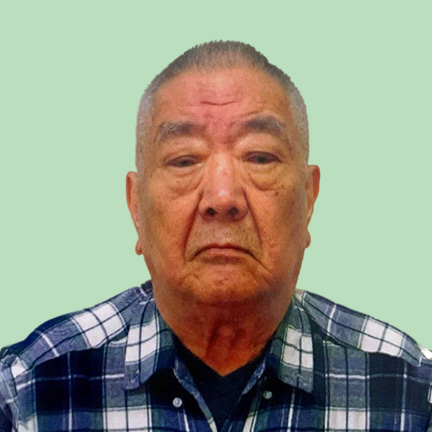
Tenzing Chhodak* is amused that China can’t avoid using the name “Tibet” despite having supposedly made it a taboo in official usage.
When I first learnt that the Chinese Communist Party (CCP) had decided to use the Chinese word “Xizang” for Tibet, I did not think too much about it, without reflecting much on its implications. I felt that China was simply giving Tibet a new name after its President Xi Jinping. After all, the President of the USA has his name everywhere – Trump Towers, Trump Airports, Trump Golf Course, Trump Kennedy Center, Trump Wife and what not. I even wondered what it would be like to put his name in front of mine to make it “Trump Tenzing”. China likes to follow the West, I told myself.
But I soon learnt that this was not the case in this particular situation. The CCP was playing a much bigger game: that of Sinicizing Tibet instead of promoting Xi’s good name.
It was in late 2023 that the CCP ordered the exclusive use of the Chinese name “Xizang” for “Tibet” in all its official documents and publications. Well, not exactly, for it was also made clear that “Xizang” only meant Tibet Autonomous Region (TAR), not Tibet, the entire Tibetan nation.
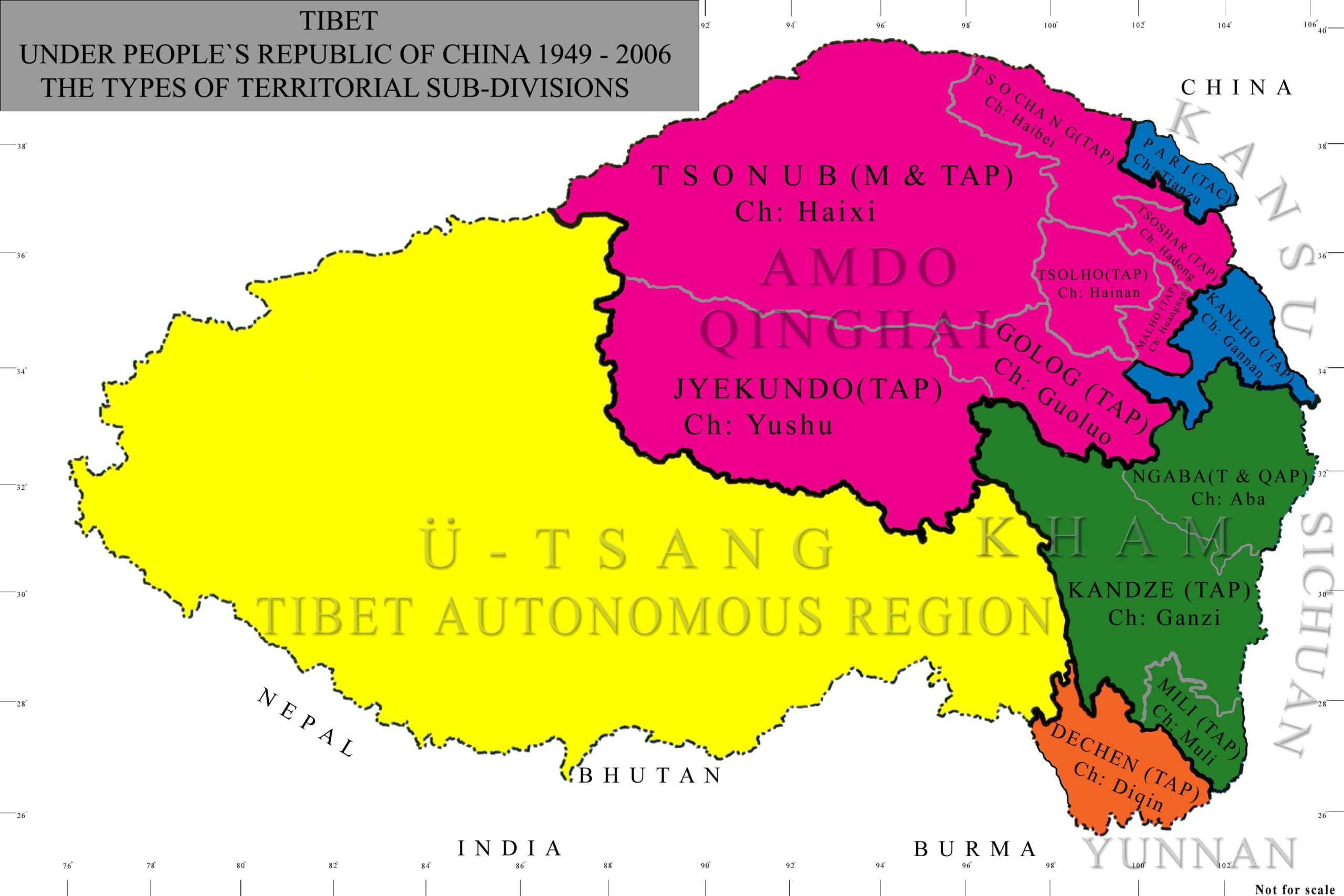
Today, baring its true color as an occupying power, China has implemented a colonial policy of divide-and-rule over Tibet, splitting the country into TAR and other Tibetan areas. The latter is much larger in size with higher total population.
The TAR is made up of seven prefectures, while the other Tibetan areas, consisting of most of the erstwhile Kham provincial region and Amdo provincial region, are made up of eleven prefectures split among four Chinese provinces. Besides, there are two Tibetan counties named Mili located in Lolo (Yi) Autonomous prefecture in Sichuan and Pari, also known Tianzhu, a Tibetan County in Gansu.
The CCP ordered the use of the Chinese word “Xizang” for TAR with the claim that this is the whole of Tibet, the name it has vowed never to use in official documents and reports.
Yet, the other Tibetan areas have kept the name “Tibet” or “Tibetan” in their names. For example, there is Dechen (Deqin) Tibetan Autonomous Prefecture in Kham and Kanlho (Gannan) Tibetan Autonomous Prefecture in Amdo. Beijing has even kept the word “Tibet” in the Tibetology terminology for the center it has established in this city for the purpose of spinning false narratives designed to Sinicize the occupied country with regard to its geography, history, politics, religion, culture, and so forth.
Besides, if the CCP means to replace everything “Tibet” with “Xizang”, how are we to write “Tibetologist” – “Xizangologist”?
In a recent conference on Tibetology in Beijing, Mr. Li Ganjie, a member of the Politburo and director of the United Front Work Bureau of the CCP, used the word “Tibet” at least 10 times in his speech. So, it seems that the term “Xizang” cannot go beyond Beijing and China.
Besides, to a non-Chinese speaker, names like Xizang, Xinjiang (East Turkestan) are utterly confusing, and one might wonder whether they have anything to do with the name of President “Xi Jinping” (a good father’s poor son).
Nevertheless, to the Tibetan people, there is but only one country, Tibet. Its border with China – in the east – is marked by the Choeten Karpo (White Stupa) in Dhartsedo in Kham.
And there are no two Tibets – Tibet and Greater Tibet, or TAR and Other Tibetan Areas. The CCP is simply trying to confuse people with several Tibet names – like TAR and Tibetan Prefectures, Greater Tibet and Tibet.
The CCP frequently points its finger at the Dalai Lama and what it calls his “splittist clique”, and accuses them of trying to create a “Greater Tibet”. In fact, the CCP and its chief, Xi Jinping, have themselves been the true splittists. Look at how they have split up Tibet in so many fragments.
Still, I ask all Tibetans to be aware that China’s use of the name “Xizang” applies only to its so-called “Tibet Autonomous Region”, certainly not to “Tibet”, the entire occupied country. And I still remain a Tibetan, not a Xizangist!
========
* The Author, Tenzing Chhodak, in his own words:
For the sake of this article, I am from TAR, part of what they call Tibet. I went to an experimental school in America where we had to go through T Groups (sensitivity training) and all school decisions were supposedly made at community meetings. I remember that a hippie was saying no classes should be held before noon since he could not get up early.
A student could choose to study history and agree to read books on Tibetan history by Prof. Goldstein. A professor may suggest including some materials produced by the United Front Work Bureau of the Chinese Communist Party for the sake of objectivity and balance. At the end of the course, the Professor wrote a course evaluation.
I got into graduate school not so much for my academic background as on the weight of my application package. One Professor said my package weighed more than five pounds.
I studied the UN for one Semester in a UN adjunct building in the fall of 1971. It was the most exciting year in the history of the UN. Bhutan joined the UN. India and Pakistan were fighting a war in Bangladesh. UN kicked out Taiwan and admitted Red China.
Some students, including myself, went to see the Chinese delegates. Nancy Deng received us in the hallway. She was born in Brooklyn and had returned to China. The head of the Chinese delegation met us. He was a member of the Gang of Four. We were requested to introduce ourselves. As soon as he heard my name, Tenzing, he sensed that I was a Tibetan. He talked about Panchen Rinpoche for about 15 minutes. Rinpoche was alive, happy, enjoying life and eating pork, etc. And he gave a talk in the UN General Assembly for seven hours. We were in the news for that encounter.