


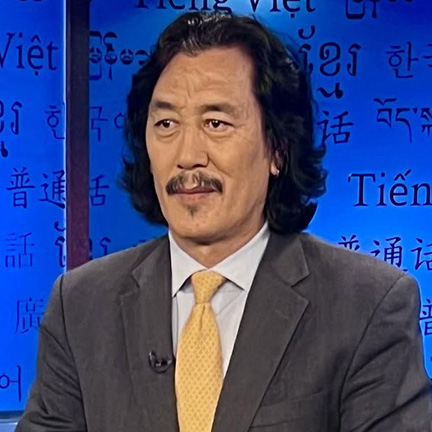
To Palden Gyal* this article is a personal and deeply moving reflection that links the self-immolations of Loga Rangzen la and Thupten Ngodup la—spanning nearly three decades—as enduring symbols of Tibetan sacrifice, resistance, and the struggle to preserve Tibetan identity. It illustrates how memory, grief, and political commitment remain deeply intertwined across generations in exile.
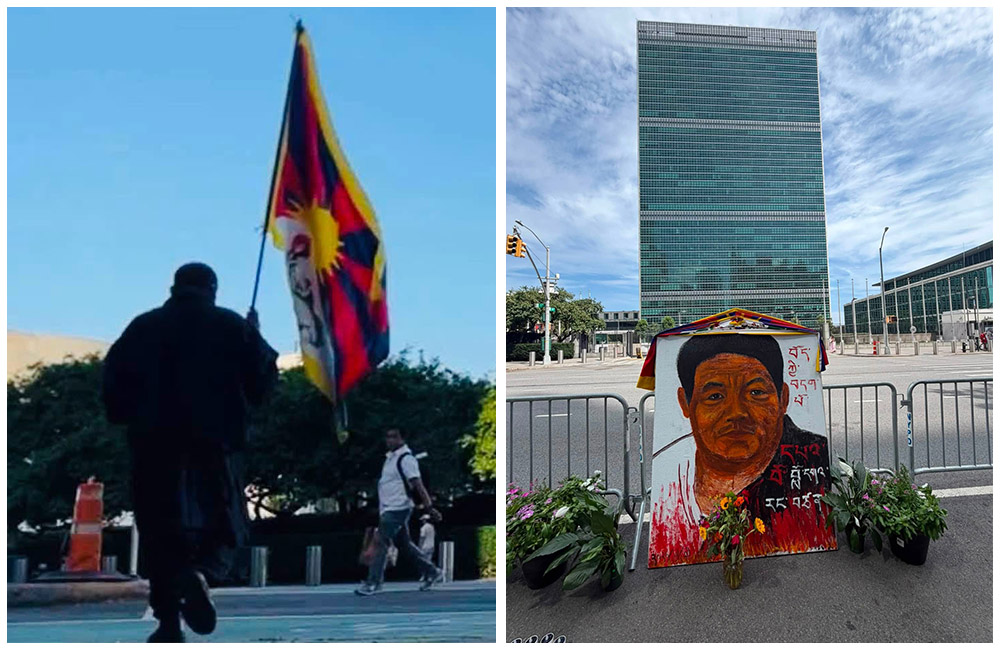
On July 2, Loga Rangzen died after setting himself on fire in front of the United Nations headquarters in New York. Before his death, he shared a six-minute live video on Facebook, calling on Tibetans in exile to remain united and to continue the struggle for Tibetan independence. He urged Tibetans to preserve our language and culture, and he spoke against China’s so-called Ethnic Unity and Progress Promotion Law.
In the weeks since his death, international attention has once again been drawn to the situation in Tibet. Tibetans across the world have taken to the streets in protest against Chinese rule and against the implementation of the Ethnic Unity and Progress Promotion Law in Tibet. This law is presented as a measure to promote unity, but in reality, it serves as a legal instrument aimed at eroding Tibetan identity – language, culture, and ultimately who we are as Tibetans.
Returning to the Spot
On August 1, I went to the place where Loga la set himself on fire and remained there for nearly four hours. Throughout the day, Tibetans came to offer Khataks before his photograph. Some knelt in prayer and prostration. A few passersby who were not Tibetan stopped to ask what had happened there, and I found myself explaining the story to them, one stranger at a time.
As I sat there, my thoughts drifted back to 2013 – to the first time I met Loga la.
In March of that year, Kunga Norbu, son of the late Taktser Rinpoche, embarked on a 10-day walk from Washington, D.C., to New York City. He made the journey in memory of his brother, Jigme Norbu, who was killed in 2011 while walking for Tibet when he was struck by an SUV in Florida. The walk also sought to draw international attention to the political oppression and religious restrictions in Tibet, particularly the wave of self-immolation protests by Tibetans inside Tibet.
Loga la joined the walk with Kunga la, along with a few other Tibetans. For two nights along the way, they stayed at my home.
I remember Loga-la as endlessly cheerful – always telling jokes and making people laugh. I can still see him pointing to his shoes as he told us how, when he decided in New York to travel to Washington and join the walk, a woman noticed that he did not have a proper pair of shoes. She immediately went out and bought him a good pair. “Now I can walk as long as it takes in these shoes,” he said.
It was such a small story. I do not know why it has stayed with me all these years, but it has. Perhaps it remains with me because, in that simple moment, so much of who Loga la was shone through – his humor, his humility, and his quiet determination. Even now, when I think of him, I remember not only his commitment to Tibet, but also the warmth and humanity he carried so naturally wherever he went.
So, when I sat on August 1 in that same place where Loga Rangzen burned himself alive, those memories came rushing back – sharp, tender, and unexpectedly vivid. Beneath them was a question I could not shake: why did Loga la make no specific demands of the United Nations, even though he chose the United Nations headquarters as the place to make his final statement and self-immolation?
That evening, I joined hundreds of Tibetans and supporters on Times Square for a candlelight vigil marking one month since his death.
An Older Memory Surfaces
Standing among that crowd on Times Square, my thoughts reached back even further – to April 27, 1998, when Thupten Ngodup la died after setting himself on fire during a Tibetan hunger strike in New Delhi.
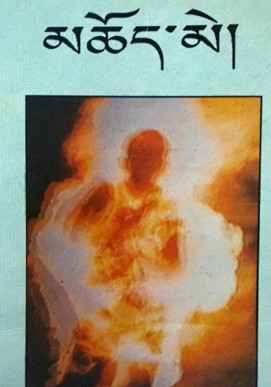
That hunger strike raised three demands on the United Nations:
- Resume discussion of Tibet based on the UN resolutions adopted in 1959, 1961, and 1965.
- Appoint a Special Envoy on Tibet to help seek a peaceful resolution to the Tibet issue through a UN-supervised plebiscite reflecting the wishes of the Tibetan people.
- Appoint a Special Rapporteur to investigate human rights violations in Tibet.
I was in Dharamsala at that time, on May 1, 1998, when Thupten Ngodup la’s coffin, wrapped in the Tibetan national flag, was carried through the streets in a procession joined by thousands of grieving Tibetans.
I remember the tears, the sorrow, and the profound respect that filled the air that day. It is a memory I have carried with me ever since.
Twenty-Eight Years, Unbroken
Twenty-eight years separate the deaths of Thupten Ngodup la and Loga Rangzen.
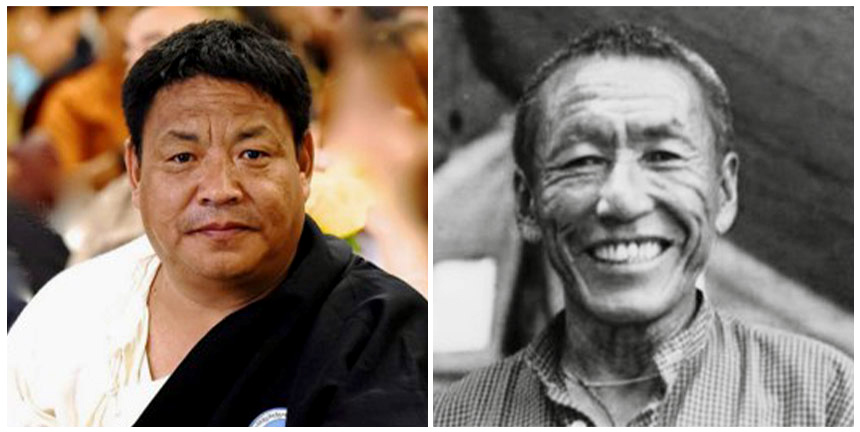
During that time, at least 157 Tibetans have set themselves on fire in protest against Chinese rule in Tibet. Among them was my own cousin, Tangzin Dolma, who was only 23 when she died on November 12, 2012.
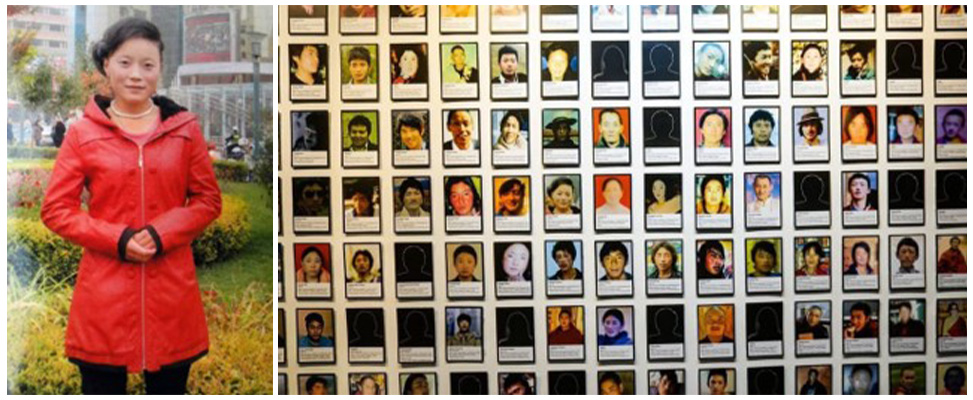
Standing in New York decades later, I found myself holding the memories of both men – Thupten Ngodup and Loga Rangzen – two Tibetans from different generations, separated by nearly three decades, yet connected by a shared sense of anguish, conviction, and determination.
Their stories are difficult to carry. Yet they are also part of the history of our people – a history shaped by sacrifice, resistance, and an enduring determination to preserve our identity and our connection to Tibet.
As Tibetans, we carry Loga Rangzen’s memory forward. We remember his call for unity, and we continue to protect the language and culture he urged us never to abandon.
His memory, like Loga Rangzen’s, belongs not only to those who knew him personally. It has also become part of the collective history we carry together. And that history, however painful, must not be forgotten.
Alongside his memory, I also want to share something I wrote in 1998 in remembrance of Thupten Ngodup la – a Tibetan whose death during the hunger strike in New Delhi left a lasting mark on our collective memory.
***
A human life has value – and power
Palden Gyal
May 10, 1998. Dharamsala
Throughout the winding path of history with its turns of sadness and happiness, we, as the people who settled on the roof of the world, have offered countless lamps for the purpose of decreasing sadness and heightening human happiness. However, until now the only individual who has been able to offer himself as a lamp for our people has been Thupten Ngodup. His offering was made for freedom and justice and for lighting a future path for our nation. Before the eyes of the world’s people, Thupten Ngodup has created a new image of Tibet and Tibetans.
On 10 March 1959, in Tibet’s capital of Lhasa, the Tibetan people vented their deep frustration at the presence of Chinese forces in their country, and so protested against the Chinese. The hunger strike was begun to mark the 39th anniversary of that protest. Organized by the Tibetan Youth Congress (TYC), three demands were made to the United Nations (UN). In India’s capital of New Delhi, six Tibetan heroes began their hunger strike.
The three demands are as follows:
- Resume the debate on Tibet based on the UN’s resolutions of 1959, 1961 and 1965.
- Appoint a Special Envoy on Tibet in order to solve the question of Tibet peacefully under a UN-supervised plebiscite in Tibet to the satisfaction and wishes of the people of Tibet.
- Appoint a special Rapporteur to investigate the human rights violations in Tibet.
Unfortunately, though the UN is an organisation that should work for freedom, justice and the respect and protection of human rights, instead, the five major member-nations on the Security Council enjoying veto power have formed something akin to a football team. For their own benefit, these five powerful nations toss about like a football the concerns of other nations – nations who struggle for justice and freedom.
Thus, since the UN’s five major powers cannot see how the Tibet issue is of any benefit to them, they have paid only lip service to the demands. Then on 9 April 1998, the 30th day of the hunger strike, the UN issued a statement expressing concern about the welfare of the six hunger strikers, but made no mention of their explicit demands directed at the UN.
On the 47th and 48th days of the hunger strike the Indian police forcibly removed the strikers from Jantar Mantar and took them to hospital. It was then that, on the 27 April, Thupten Ngodup offered himself as a lamp, shouting “Long live His Holiness the Dalai Lama” and “Victory to Tibet”. At 00:05 on 29 April, Thupten Ngodup passed away.
As a member of the second group of hunger strikers, he had filled out a pledge at the Tibetan Youth Congress, in which his will stated in part the following:
“I admire the TYC for organizing the hunger strike. Moreover, I have deep admiration and respect for the freedom struggle of six million Tibetans, and especially for those actively struggling inside Tibet. I am very happy to have the opportunity to join the struggle and have no regrets in doing so. In the future, it is important for all Tibetans to join the struggle and to support, as I have, the middle path outlined by His Holiness the Dalai Lama.”
On the day of his death, His Holiness the Dalai Lama, the Kashag, the Parliament and the TYC all put forth statements.
The Dalai Lama’s statement included the following:
“Yesterday, we witnessed the most unfortunate incident of a Tibetan man burning himself alive. I am deeply saddened by this. For many years, I have been able to persuade the Tibetan people to eschew violence in our freedom struggle. Today, it is clear that a sense of frustration and urgency is building up among many Tibetans, as is evidenced by the unto-death hunger strike and the tragic incident of yesterday.
Although I disagree with their method, I do admire the motivation and determination of these Tibetans. They were prepared to die not for their selfish ends, but for the rights of six million Tibetans and the survival of their culture.”
The statement from the Tibetan Parliament included the following:
“We are deeply saddened that, for the purpose of regaining freedom in Tibet and moreover for helping to realize the demands of the hunger strike movement, Mr Thupten Ngodup immolated himself and passed away. We admire his bravery and achievement which must go down in Tibetan history. We will pray that all his wishes will be fulfilled and we offer comfort to all his relations.”
The Kashag’s statement included the following:
“Mr Thupten Ngodup’s self-immolation for the purpose of Tibetan religion and politics is an act of courage and achievement. His act has drawn world-wide attention to the situation in Tibet, which worsens day by day.”
The TYC statement included the following:
“We salute the unwavering bravery shown by Mr Ngodup, who was declared dead by the doctors at 00:05 hrs, 29 April 1998. A martyr is born to inspire us all. In death, he has dignified our existence.
The Tibetan people have sent a clear message to the world that they can sacrifice themselves for the cause of a free and independent Tibet. If the attitude of indifference and lack of support to the issue of Tibet continues, more blood will be shed in the coming days. We hope that the conscience of the free world will prevail soon and save Tibet and its people from the Chinese occupation.
The Tibetan people will fight to the last drop of their blood. Tibetans of this generation will create a new chapter in the modern history of Tibet – a new chapter called FREE TIBET.”
On 1 May in Dharamsala, Thupten Ngodup’s coffin was draped with a Tibetan flag and accompanied by thousands of Tibetans weeping on a wave of sorrow. Following tradition, Thupten Ngodup was cremated at a funerary ceremony befitting a hero. This new hero who has emerged in our modern history has departed from this world. Many young people expressed their deep sorrow for his death and respect for his sacrifice by writing and posting memorial poems on walls in his honour. Several of these poems were then submitted to BOD-KYI-DUS-BAB (Tibet Times). In his memory, I had a strong desire to see these poems available to the public, and so I collected and edited some of these pieces.
Though this book does not have the power of prayer to lead him to heaven, yet, I will pray that this collection will help to keep the lamp of his life always burning brightly in the hearts of Tibetans and people around the world.
—
* Palden Gyal is an accomplished broadcast journalist with more than three decades of experience. He served for 29 years as Senior Editor and Deputy Director of the Tibetan Service at Radio Free Asia until 2025. He was a founding member of the International Tibetan Media Organization and served as its first president in Washington, DC. An Edward R. Murrow Award recipient, he also co-founded Tibet Times and other publications.
Born in Tibet, Palden Gyal studied Tibetan literature and history at Qinghai Nationalities University. In 1988, he escaped to India, where he worked for the Tibetan government-in-exile for five years. He later moved to London in 1993 to continue his studies at the University of Westminster.