


OPINION
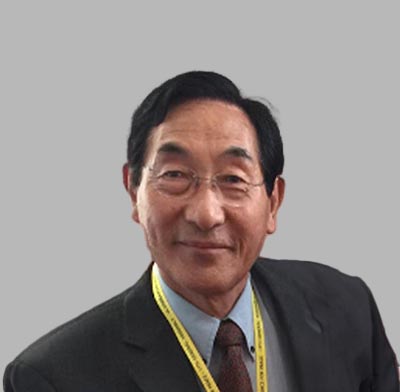
After witnessing a video commentary on the second fact-finding delegation sent by His Holiness the Dalai Lama which toured Tibet from 1 May 1980, Phuntsog Wangyal*, a member of that delegation, asks that the record be set straight on what he says are a number of factual errors in that commentary.
Recently, a friend sent me a video (attached here) in which a person was giving a commentary about the delegation and its visit to Tibet. As I listened to it, I felt that the commentary had either been prepared in great haste or that the commentator had not had the opportunity to research and understand the subject fully. I noticed a number of factual errors and felt that it was important, as someone who was actually a member of the delegation, to put some of the facts on record.
According to the commentator, we allegedly said to Ngapo ‘Ape’ Ngawang Jigme, “You sold Tibet in Chamdo; why didn’t you fight against the Chinese? etc.” I have no recollection whatsoever of such a statement being made by any of us.
What I do remember clearly is that we spoke openly and frankly with Tibetans, even in the presence of Chinese officers and local Tibetan and Chinese officials. We did not hesitate to speak about what we had seen and learned on the ground. Our conversations were straightforward, open, and confident. We were there to see the situation for ourselves.
Similarly, the commentator’s explanation of the visit being cut short by fifteen days is too simplified and, in my view, potentially misleading. The circumstances surrounding the shortening of the delegation’s visit had much more to do with the political situation at the time than his account suggests.
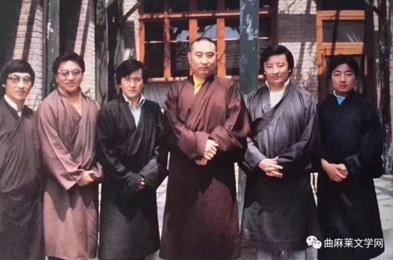
To understand what actually happened, it is important to look at the circumstances in which the decision was made and to consider the contemporary reports rather than relying on a simplified account given many years later. The political sensitivities surrounding the delegation’s visit, our meetings with Tibetans, and what was being discussed and reported at the time all form part of the story.
The Second Delegation was not simply a group of tourists following a predetermined itinerary. Its visit took place in a highly sensitive political environment, and what we saw, what Tibetans told us, and the discussions that took place inevitably had political implications. The Chinese authorities were also closely involved in the arrangements and were aware of what was taking place.
For that reason, I believe that saying simply that the visit was “cut short by fifteen days” without explaining the circumstances gives an incomplete picture, potentially misleading. The reasons behind the decision are important for anyone trying to understand what happened during the delegation’s visit and the political atmosphere surrounding it.
There are contemporary reports and records available which provide a much clearer picture of these events. They should be consulted before drawing conclusions about why the visit ended earlier than originally planned. For me, as someone who was a member of the delegation, it is important that this part of the history is also recorded accurately and in its proper political context.
For those who would like to know more about what I personally witnessed and reported at the time, there is a contemporary record that may be of interest. I gave a personal report at a public meeting in Darjeeling in 1980. The meeting was recorded, and my report was subsequently published in the Tibetan-language newspaper Tibetan Freedom Press (བོད་མིའི་རང་དབང་།) on 19 September 1980.
A similar report was also published in English in Tibet News Review, Vol. 1, Nos. 3/4, Winter 1980/81, published by the Tibetan Community in Britain.
These contemporary records are important because they provide an account of the events written and published at the time, rather than many years later through the interpretation of others.
I hope this helps provide a clearer understanding of the facts.
—
Phuntsog Wangyal* is a former Representative of His Holiness the Dalai Lama in London and a former Member of the Tibetan Parliament-in-Exile