


OPINION
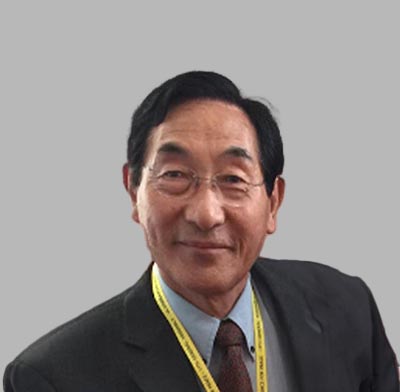
While the Middle Way approach of seeking autonomy under Chinese sovereignty remains the official policy today, conditions can change in ways that would make independence a more viable cause so long as Tibetans do not allow the flame of it, no matter how small, to disappear, suggests Phuntsog Wangyal.*
When I was in a Chinese school in Lhasa in the 1950s, we were all required to sing the song 《东方红,太阳升》 (Dōngfāng hóng, tàiyáng shēng). At the time, we did not fully understand what the song meant. Later, I learned that it meant, “The East is red, the sun is rising.”
The song expressed the idea that the Communist Party was like the sun: wherever the Party was present, it would bring light, liberation, and a better future.
But during the 1960s, through the Great Leap Forward and the Cultural Revolution, the Chinese people experienced enormous suffering and devastation. For many, the promise of light and liberation became associated instead with tragedy and repression.
Mao Zedong, once celebrated as the great saviour of China, remains one of the most consequential and controversial figures of the twentieth century. His portrait still hangs above the great gate of the Forbidden City, facing Tiananmen Square. Yet the enormous human suffering associated with his rule has profoundly changed how his legacy is viewed, both within China and around the world.
The very nature of existence is that whatever rises must eventually fall; what begins in the light of day eventually gives way to the darkness of night. No political system, empire, or economic power lasts forever. The Ottoman, British, and Russian empires were once powerful and seemingly enduring; yet all underwent profound transformation. In the same way, the Chinese Communist Party and China’s position as one of the world’s largest economies are not immune to change.
The growing interest among some Chinese people in Buddhism, and the continuing interest of some Chinese people in His Holiness the Dalai Lama, can be seen as signs that official policies and the authoritarian system of the Chinese Communist Party do not represent the aspirations of every Chinese person. Tibetans and Uyghurs in particular have experienced policies that many regard as oppressive and destructive of their cultural, religious, and political freedoms.
At the same time, there is a growing number of Tibetans who speak openly of freedom and independence. Their voice should not be misunderstood as disrespect toward His Holiness the Dalai Lama. His Holiness’s Middle Way Approach has been a genuine and compassionate proposal aimed at finding a mutually beneficial solution for both Tibetan and Chinese peoples. Yet, after decades of repeated rejection by the Chinese government, many Tibetans have come to believe that the policy has failed to produce meaningful negotiations or results.
The Middle Way Approach is not something carved in stone. It should not be understood as preventing Tibetans from thinking about other possibilities for their future. Political circumstances change, and policies must sometimes be reconsidered when they no longer achieve their intended purpose.
As some Tibetan leaders and political figures have argued, more than seven decades have now passed without a mutually acceptable political settlement. For many Tibetans, the repeated rejection of negotiations has created a growing sense that a different approach may eventually be necessary.
When Tibetans, including His Holiness the Dalai Lama, came to India in 1959, there remained a profound hope and determination to return to Tibet. That hope has never completely disappeared. The continuing acts of protest and sacrifice by Tibetans, including the self-immolation of young Tibetans such as Loga Rangzen, demonstrate the depth of despair as well as the enduring desire for freedom and dignity.
The flame of Tibet may sometimes appear very small. It may seem almost extinguished by the weight of political circumstances. But a flame does not have to be large to remain alive.
It is the responsibility of the Tibetan people to protect that flame—not through hatred or violence, but through perseverance, unity, truth, compassion, and the preservation of our identity.
A seed can remain buried for a long time before conditions allow it to grow. Likewise, the dream of a free Tibet may appear distant today, but distance does not mean death.
The flame may be dim, but it is still burning.
And as long as that flame remains alive, there remains a seed of revival, a source of hope, and the possibility that one day Tibetans may return to a Tibet that is free, peaceful, and able to determine its own future.
—
* Phuntsog Wangyal is a former Representative of His Holiness the Dalai Lama in London and a former Member of the Tibetan Parliament-in-Exile