


OPINION
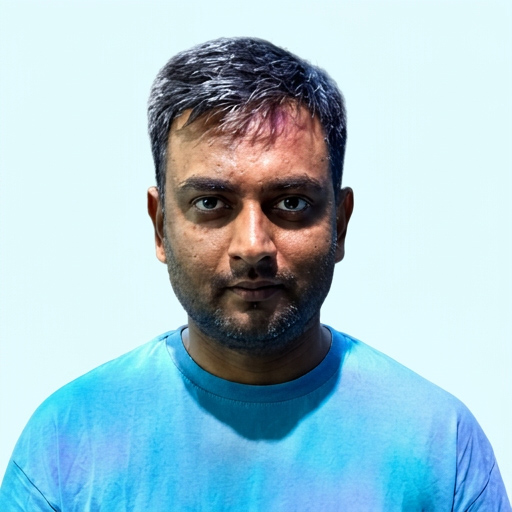
Dr Yashwant Singh* argues that the issue concerning the recognition of the reincarnation of the current Dalai Lama, when the time comes eventually, will force governments to adopt what may amount to a position on the political status of Tibet that they have so far managed to avoid by referring to religious repression, human and cultural rights, and so forth.
For decades, diplomacy toward Tibet has rested on a single unstated premise: that the hardest question could be deferred indefinitely. Governments could criticize religious repression without contesting sovereignty, host the Dalai Lama without endorsing independence, raise cultural rights in Geneva (UN Human Rights Council) while avoiding the sovereignty question in New York (UN General Assembly). This worked because it was cost-free: a set of positions that never had to resolve into one decision. The succession of the 14th Dalai Lama will end that arrangement, because recognizing a reincarnation is not a statement of values but an act that confers legitimate religious-political authority on one person and delegitimizes any rival.
Two incompatible legal architectures
The United Nations (UN) Charter itself is split: Article 2(7) bars intervention in matters “essentially within domestic jurisdiction,” while Article 1(2) commits the organization to “self-determination of peoples.” International law never settled whether self-determination survives inside an existing state once decolonization is complete. The International Court of Justice’s 2010 Kosovo advisory opinion sidestepped this, ruling only that a declaration of independence didn’t itself violate international law, without saying international law affirmatively supported one. That evasiveness is now the default posture toward Tibet too: almost no government today disputes People’s Republic of China (PRC) sovereignty over the Tibet Autonomous Region; the old argument about the legality of the 1950-51 incorporation has been displaced by a narrower one about governance: language, religious administration, cultural preservation. A sovereignty claim invites confrontation; a governance claim invites monitoring, and the UN’s machinery is built for the latter.
Why Geneva absorbs what New York avoids
The UN General Assembly’s (UNGA) high-level week is where heads of state spend scarce rhetorical capital on crises with immediate strategic stakes. The Human Rights Council and its special-procedures system carry reputational, not existential, weight. China’s Law on Promoting Ethnic Unity and Progress, passed by the National People’s Congress on March 12, 2026, in force since July 1, illustrates the pattern: the UN Human Rights Office and several former UN special rapporteurs warned it could accelerate assimilationist pressure on Tibetan, Uyghur, and Mongol communities, but that concern moved through special-procedures communications and OHCHR statements, not a General Assembly resolution. Tibet hasn’t disappeared from the UN (General Assembly), a recurring lament over the last several years; it has migrated into the venue least likely to generate diplomatic cost, which is exactly why it survives there. At UNGA’s 81st session (opened September 8, 2026; General Debate September 22-28), Tibet-related events entered the General Debate discourse indirectly through the transboundary Himalayan disaster, while Nepal’s official speech itself avoided explicitly naming Tibet (instead referred to the neighbouring region as “China”). The political ‘Tibet Question’ found no mention in the proceedings.
Why succession is different
Succession cannot be phrased as a governance concern. Beijing has signalled it will control the process through state-approved procedures, a claim UN special-procedures experts have directly challenged, citing the still-unresolved 1995 disappearance of Gedhun Choekyi Nyima, the child the Dalai Lama recognized as the 11th Panchen Lama. If Beijing installs its own successor while the Dalai Lama’s institution recognizes a different child, likely born in exile, every government will face a binary with no “rights-without-recognition” escape hatch: which reincarnation does each government’s embassy treat as legitimate. Religious legitimacy, unlike governance criticism, isn’t divisible.
Three hedges that won’t survive the deadline
India: its posture, hosting the Dalai Lama and the Central Tibetan Administration while recognizing Chinese sovereignty, rooted in the 1954 Panchsheel framework, has worked because it never demanded one decisive act. Hosting, or even not obstructing, a recognition ceremony for an exile-based successor would be a decision with consequences for the border dispute and the broader China relationship that can’t be walked back.
Washington: a legislation, The Assuring the Future of Tibet Act of 2026, introduced by Senators Jeff Merkley, already anticipates Chinese efforts to control succession, which suggests policymakers see the deferral ending, but anticipating a decision isn’t making one. Once a successor is named, “support dialogue, criticize repression, avoid the sovereignty question” stops being an available position.
Beijing: its resistance to any external role in succession is inseparable from its anxiety about precedent across Xinjiang, Hong Kong, and Taiwan, which is why this generates more institutional intensity from Beijing than ordinary rights criticism. It is a test of the non-interference doctrine, not a rights dispute.
The compression
None of this makes the current silence dishonest: it reflects a system that found genuine, low-cost ways to manage a question it never resolved. Succession removes the low-cost options. It will force every government that has spent decades avoiding a decision to make one, in public, with no institutional venue built to absorb the cost.
—
* Dr Yashwant Singh is an Indian sociologist working at the intersection of urban studies, development, nature and geopolitics. He holds an M Phil in Sociology from the University of Delhi and a PhD from the University of Hyderabad, and recently served as Assistant Professor of Sociology at GITAM (Deemed to be) University, Bengaluru. Alongside his academic work, Dr Singh’s essays and analyses have been published across several international platforms, including Across Voices, Modern Diplomacy, Eurasia Review, Jerusalem Strategic Tribune, Geostrategic Media, South Asia Journal, World Geostrategic Insights, and IA-Forum, where he offers sociological and analytical perspectives on global affairs, strategic developments, and the changing dynamics of contemporary societies.