


(TibetanReview.net, Nov02’26) – On the occasion of the Buddha’s Return from Heaven (Lhabab Düchen), and marking the 18th anniversary of its king’s coronation, Bhutan on Nov 1 raise 108 Buddhist stupas in a single day, formally launching the Himalayan kingdom’s ambitious plans for a “mindfulness” city aimed at driving economic growth and sustainability.
Conceived and established by King Jigme Khesar Namgyel Wangchuck by a Royal Charter in 2024 and designed by Danish architects, the city is taking shape as a vibrant economic hub that puts the ideals of ecological sustainability and the happiness of the country’s citizens over commercial profit. The Kingdom with a population of 800,000 currently faces a declining birth rate and an exodus of young people seeking opportunities abroad.
The city, currently a small town with a population of about 10,000, is located in southern Bhutan along the border with India, about 150 miles (240 kilometres) south of Thimphu, the nation’s capital.
Each Jangchub Chorten (also known as the Stupa of Enlightenment or Bodhi Stupa) – one of the eight classical types of Buddhist stupas – stands about 50 feet (15 metres) tall, spaced about 354 feet (108 meters) apart, in a single file along the Mo Chhu river, to appear like a “procession” of monuments, according to the project’s website. The number 108 is sacred in Buddhism.
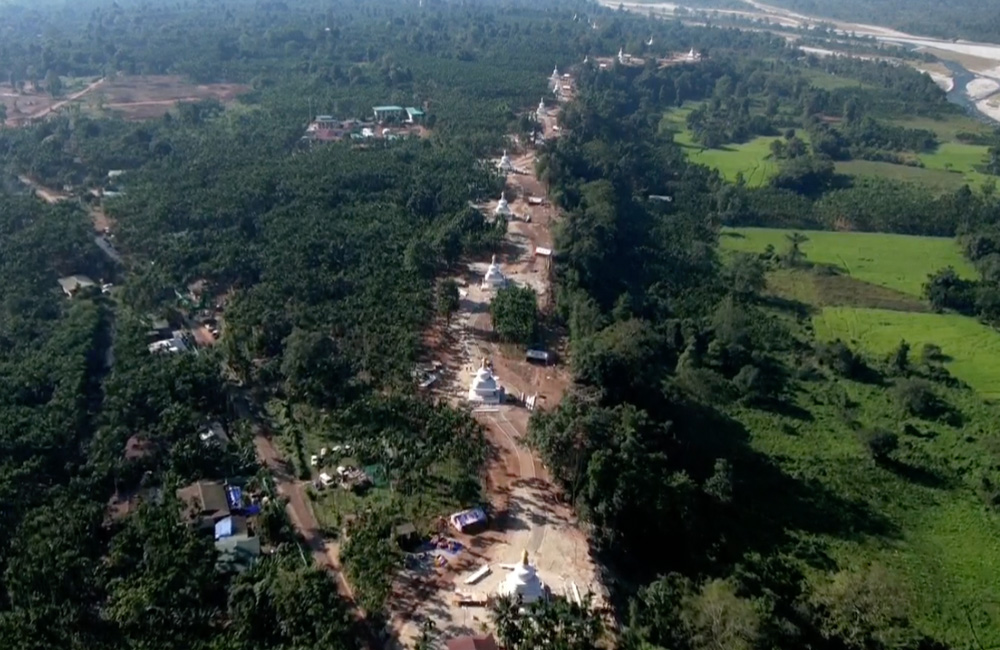
“This is not merely an engineering feat,” according to Bhutan’s Project 108. “In the Buddhist tradition, building a chorten is one of the most meritorious acts a person can undertake, a gift of spiritual benefit not just to those who build it, but to everyone who encounters it. Project 108 is a collective offering to the world.”
While the external structures of all 108 stupas were completed on Nov 1 with the help of about 40,000 volunteers, the preparations had been underway for months.
The ceremony was attended by Buddhist masters from various schools and denominations and about 200,000 people, the AP and AFP Nov 1 cited officials as saying. They included top leaders from all the five principal schools of Tibetan Buddhism.
Also present was the Venerable Pannakara, a Theravada Buddhist monk, who earlier this year completed a 108-day, 2,300-mile Walk for Peace from the Huong Dao Vipassana Bhavana Center in Fort Worth, Texas, to Washington, DC. The delegation included his teacher, the Most Venerable Ratanaguna, and others.
Pannakara posted a video on the Walk for Peace Facebook page, taking a tour of the completed stupas. He said he watched the entire endeavour as volunteers and workers, donning construction vests and hard hats, assembled prefabricated pieces to build the 108 stupas in about 12 hours — starting at 2 am and finishing up at 2 pm — about four hours ahead of schedule.