


OPINION
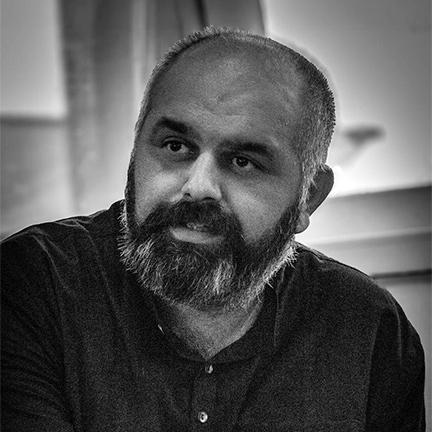
While recognizing the reincarnation of a religious leader in Tibetan Buddhism is a process that intrinsically involves religious beliefs and practices, the fact that this practice and political power have been tangled for a long time in Tibet while the next Dalai Lama will matter to Tibetans both inside Tibet and in exile mean that there will almost certainly be two Dalai Lamas after the current one, writes Saurabh Chauhan.*
Who gets to decide the next Dalai Lama? That question sits at the centre of a quiet but serious fight between the Tibetan exile community and the Chinese government. For Tibetans, this has always been a religious matter. For ‘atheist’ Beijing, it’s just a matter of control.
The idea of recognising reincarnate lamas, Tulkus, didn’t start with the Dalai Lamas. By the twelfth and thirteenth centuries, different Tibetan Buddhist schools were already identifying children they believed were the rebirths of important teachers. The Geluk school, the one the Dalai Lama belongs to, eventually became the most powerful. Gendün Drup (1391–1474) is now counted as the First Dalai Lama, though no one called him that while he was alive. The title only came later, in 1578, when the Mongol leader Altan Khan gave it to Sönam Gyatso. After that, people started applying it backwards to the two earlier figures.
The idea that the Dalai Lamas are emanations of Avalokiteśvara did not start with politics. It grew out of earlier Tibetan Buddhist understanding, especially around the teacher Dromtön in the eleventh century. Tibetan tradition has long seen Avalokiteśvara as the special protector of the Tibetan people. Linking the Dalai Lama lineage to him was a natural development of that belief, not something imposed from outside.
When Altan Khan gave the title Dalai Lama to Sönam Gyatso, it was recognition of an already respected reincarnate lama within the Tibetan religious circle. The title later grew in importance, but the spiritual standing of the lineage did not depend on a Mongol ruler’s gift, that came from the Tibetan tradition itself.
Recognition was never a simple or completely clean process. Senior monks looked for signs, consulted oracles and sometimes tested whether a child recognised objects that had belonged to the previous lama. The entire process was understood as a religious responsibility.
But there is more to this process than looking for a child who recognises a dead lama’s belongings. In Tibetan Buddhism, the search can begin with things the previous lama is believed to have left behind. That could be a letter, a prediction, or some indication of where he might be born again. Senior lamas may consult oracles or perform divinations.
Sometimes a child’s own words and behaviour become part of the inquiry, especially if he appears to remember people or places from the life of the lama who has died. These are not separate tricks that can be applied mechanically. They are part of a religious process in which different signs are considered together, and where the judgement of experienced spiritual masters carries considerable weight.
The world has already seen what happens when the powers control things. In 1995 the Dalai Lama recognised one child as the Panchen Lama. The boy chosen by the Dalai Lama – Gedhun Choekyi Nyima – along with his family, vanished and has not been seen since. China’s candidate, Gyaltsen Norbu, is still in place and has recently called for religious work in Tibet to align with Chinese assimilation policies.
After wars involving Tibet, Nepal and the Gurkhas, the Qing emperor Qianlong decided in 1793 that the names of candidates for important reincarnations should be put into a golden urn and drawn by lot. It was an imperial intervention into a system that already existed. Tibetan institutions had been recognising reincarnations for centuries before anyone in Beijing invented the urn.
In practice, the urn was not used the same way every time. The Thirteenth and Fourteenth Dalai Lamas were recognised mainly through the older Tibetan methods – investigations by senior lamas, traditional signs, the usual process. That history matters, because it is exactly why many Tibetans reject the idea that the urn is somehow essential.
After the Thirteenth Dalai Lama died in 1933, the Tibetan regent, Reting Rinpoche, sought signs that might help identify his successor. According to the official account, he looked into the waters of Lhamo Lhatso, a sacred lake south of Lhasa, and saw visions that included the letters Ah, Ka and Ma, along with images of a monastery and a house. These were treated as clues, not as an answer in themselves. The search party eventually travelled to Amdo, in northeastern Tibet, where the young Lhamo Thondup was found. For Tibetans who follow this tradition, the lake was not merely a place of pilgrimage. Its visions formed one part of a much wider search guided by religious signs and the judgement of senior lamas.
The Dalai Lama’s 2011 statement describes the use of predictions, oracles and visions in the recognition process and records that the Golden Urn was not used to recognise the Thirteenth or Fourteenth Dalai Lama.
There is another part of the tradition that often gets lost when the debate is reduced to the Golden Urn. The words of the lama who has died can matter as much as the search that follows. A prediction about a future birthplace, a letter left for disciples, or an instruction about what should happen after his death may influence whether a search begins and where it is taken. There are also accounts of lamas who expressed a wish that no further reincarnation should be sought. One published account, concerning the Fourth Reting Rinpoche, describes how he asked his monastery’s administrator not to search for his next incarnation. The episode is a reminder that the tradition is not simply about finding a child and giving him an inherited title. It also involves the wishes, instructions and religious responsibilities associated with the lama who has passed away.
Today the Chinese government insists that any future Dalai Lama must be chosen according to its rules, including the Golden Urn and state approval. The Dalai Lama has said the future of the institution is for him and the Tibetan Buddhist tradition to decide.
This is not just a technical disagreement about procedure. One side sees religious authority as belonging to the tradition and its senior figures. The other side sees it as something the state has the right to supervise. The next Dalai Lama will matter to Tibetans both inside Tibet and in exile.
Most people expect the same pattern again. China will almost certainly name its own Dalai Lama. The exile community will recognise a different one. So there will likely be two of them, one controlled by China and another accepted by the Tibetans. The History has been like this. Religious practice and political power have been tangled up for a long time.
—
* Saurabh Chauhan is a journalist and independent researcher based in Himachal Pradesh. He spent nearly eight years with Hindustan Times, reporting from Shimla, Chandigarh and Lucknow, where he covered a wide range of political, social and environmental issues. His work has also appeared in platforms such as The Print, BBC Hindi, Firstpost and several other publications. Currently working independently, Chauhan is engaged in long-form research and writing. He is authoring a forthcoming book, Prayer Wheels in the Cloud, which explores the future of Tibetan culture, religion and political struggle through the lens of technology and a rapidly changing world.