


OPINION
If John Dewey, as the architect of progressive education, changed how the world understands education, Ama Jetsun Pema-la – through her decades of running the TCV schools under a holistic educational system which integrated academic learning, cultural preservation, emotional care, and community living – changed how it is experienced, writes Tenzin Jigmey.*
In global conversations about education reform, we often turn to theory. We cite philosophers, analyze systems, and debate learning models. Few names appear as frequently as John Dewey, the architect of progressive education, who argued that learning should be active, democratic, and rooted in real-life experience. I have long admired his philosophy and strive to apply its principles in my daily life (Dewey, 1938; Westbrook, 1991).
Dewey reshaped how the world thinks about education. But in a small community of Tibetan refugees in India, one woman showed the world what those ideas look like when they are lived. Her name is Jetsun Pema known simply as “Ama-la,” in Tibetan or “mother.” And her work may offer one of the most urgent lessons for education today. So recently, I watched a YouTube video titled “Amalak song ,” and I cried and realized how important that woman is to my life, and I decided to write something about her and her impact on my life.
Beyond Classrooms, Toward Human Lives
Education debates today are often dominated by metrics: test scores, graduation rates, and global rankings. We ask whether students are “college-ready” or “career-ready.” We rarely ask a more fundamental question:
Are they life-ready?
Dewey warned against reducing education to passive memorization. He argued that students learn best through experience, participation, and reflection. Classrooms, he believed, should mirror a democratic society. They should be places where students learn not just content, but how to think, engage, and belong.
Yet even Dewey’s powerful ideas remain abstract for many, filtered through policy, diluted in implementation, or constrained by standardized systems. John Dewey believed that education was not merely preparation for life but life itself. He challenged traditional rote learning and emphasized the importance of experience, interaction, and reflection in the learning process. His philosophy of “learning by doing” encouraged educators to create environments where students actively engage with ideas rather than passively receive information (Dewey, 1938).
Dewey’s vision of education was inherently democratic. He argued that schools should mirror society and prepare individuals to participate meaningfully in civic life. This perspective revolutionized classrooms by shifting the focus from teacher-centered instruction to student-centered learning (Dewey, 1916). His influence extended far beyond the United States, shaping educational reforms worldwide. In many respects, Dewey transformed the intellectual framework of education itself (Westbrook, 1991).
However, as transformative as his contributions are, they largely reside within the realm of philosophy and systemic reform. His work provided a powerful blueprint, but one that required others to interpret, implement, and humanize within real-world contexts (Biesta, 2010).
That’s where Ama-la’s story begins.
Ama Jetsun Pema: Changing Lives Through Compassionate Action
In contrast, Jetsun Pema responded not from abstract theory but from urgent human need. Following the Tibetan displacement of 1959, thousands of children were left without homes, families, or access to education. The challenge extended beyond schooling it was about restoring lives (McConnell, 2016).
As the long-serving leader of Tibetan Children’s Villages (TCV), Ama-la took on this immense responsibility. Under her leadership, TCV evolved into a holistic educational system integrating academic learning, cultural preservation, emotional care, and community living (Pema, 2006; TCV, n.d.).
Ama-la’s approach to education was profoundly holistic. She understood that for children in exile, education must go beyond textbooks. It needed to address trauma, foster resilience, and preserve cultural identity. She created environments where children were nurtured as whole individuals emotionally, socially, and intellectually (Pema, 2006). In many ways, she embodied the principles Dewey envisioned. Her institutions practiced experiential learning, community engagement, and child-centered education. Yet her work was distinguished not only by its alignment with theory but by the compassion and commitment that brought those ideas to life (Gutek, 2014; Pema, 2006).
A Personal Journey Shaped by Ama-la
For me, Jetsun Pema’s influence is not abstract; it is deeply personal. I began my teaching career at Tibetan Children’s Villages. Those years were formative, shaping my professional identity and grounding me in values of service, compassion, and resilience. TCV was more than a workplace; it was a living embodiment of Ama-la’s vision, where education and care were inseparable (TCV, n.d.). I later pursued research at Men-Tsee-Khang, where I engaged with traditional Tibetan knowledge systems and deepened my connection to my cultural heritage (Men-Tsee-Khang, n.d.).
My journey then took me to Delaware, where I worked as an associate chemist. Transitioning from a Tibetan educational environment to a scientific role in the United States was both challenging and transformative. It required adaptability, perseverance, and confidence—qualities I had developed during my time at TCV (TCV, n.d.).
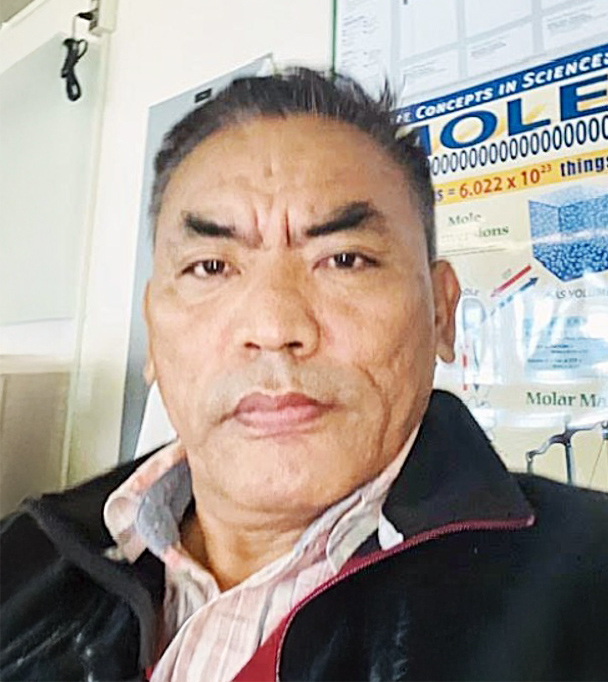
Today, I serve as a public-school chemistry teacher in the United States, a role I have held for over twelve years. In my classroom, I strive not only to teach chemistry but also to inspire, support, and nurture a sense of belonging—reflecting the environment I experienced at TCV (Darling-Hammond, 2017).
Each stage of my journey has been shaped by Ama-la’s influence. Her vision did not merely educate me; it empowered me to navigate diverse worlds while remaining grounded in my identity (Pema, 2006).
Two Visions, One Purpose
A comparison of John Dewey and Jetsun Pema reveals two distinct yet deeply connected approaches to education. Dewey represents the power of ideas. His work reshaped educational philosophy and provided a framework for progressive learning. He challenged educators to rethink teaching and prioritize student experience (Dewey, 1916).
Ama-la represents the power of action. Her work translated these ideas into lived reality, addressing the immediate needs of a vulnerable population. She demonstrated that education is not only intellectual but also relational, compassionate, and transformative (Pema, 2006). While Dewey changed how the world understands education, Ama-la changed how it is experienced (Westbrook, 1991; Pema, 2006). Their contributions are not in opposition but in harmony. Dewey’s theories find their fullest expression in environments like TCV, where education becomes dynamic, inclusive, and deeply human (Biesta, 2010).
The Deeper Meaning of Education
The lives of these two figures invite us to reconsider what education truly means. Is it simply the transmission of knowledge? The development of skills? Or something deeper?
Ama-la’s work reveals education as an act of compassion—a means of preserving identity, healing trauma, and empowering individuals to overcome adversity (Pema, 2006). Dewey’s philosophy reminds us that education must be active, meaningful, and rooted in real-life experience, preparing individuals not only for careers but for participation in a democratic society (Dewey, 1916). Together, they show that education is both a science and an art—balancing structure with empathy, and theory with lived practice (Biesta, 2010).
A Legacy That Lives On
Today, Jetsun Pema’s legacy continues to inspire generations. Tibetan Children’s Villages remains a model of holistic education, demonstrating how schools can function as communities of care and resilience (TCV, n.d.).
For those shaped by her vision, Ama-la’s legacy is not confined to institutions—it lives within us. It influences how we teach, lead, and engage with the world (Pema, 2006). In my own classroom, I carry forward these values by striving to create an environment where students feel supported, learning is meaningful, and every individual is valued (Darling-Hammond, 2017).
Conclusion
The comparison between John Dewey and Jetsun Pema is not merely academic; it reflects two powerful ways of understanding education. Dewey changed how the world thinks about education.
Ama-la changed how people experience it (Westbrook, 1991; Pema, 2006). For me, her impact is not measured in theories or publications, but in the life I have been able to build—a journey that began in a small community in exile and continues in classrooms across the world. Because of Ama-la, I am not only an educator—I am a living testament to the power of compassionate education. And perhaps that is the most profound form of transformation.
References
Biesta, G. (2010). Good education in an age of measurement. Routledge.
Darling-Hammond, L. (2017). Empowered educators. Jossey-Bass.
Dewey, J. (1916). Democracy and education. Macmillan.
Gutek, G. L. (2014). Philosophical, ideological, and theoretical perspectives on education.
Pearson.
McConnell, F. (2016). Rehearsing the state: The political practices of the Tibetan government-
in-exile. Wiley-Blackwell.
Pema, J. (2006). Tibet My Story. Element Books.
Tibetan Children’s Villages (TCV). (n.d.). Official publications and reports.
Westbrook, R. B. (1991). John Dewey and American democracy. Cornell University Press.
Men-Tsee-Khang. (n.d.). Official institutional materials.
—
* Tenzin Jigmey is presently a high school chemistry teacher and an adjunct lecturer at Union County College in New Jersey. With years of experience in both education and laboratory work, he brings a unique perspective as someone who has journeyed from the Tibetan exile school system to the American education system. His reflections draw on his personal experiences as a student, teacher, and community member dedicated to education and growth.
Contact : jigme1959@gmail.com