


OPINION
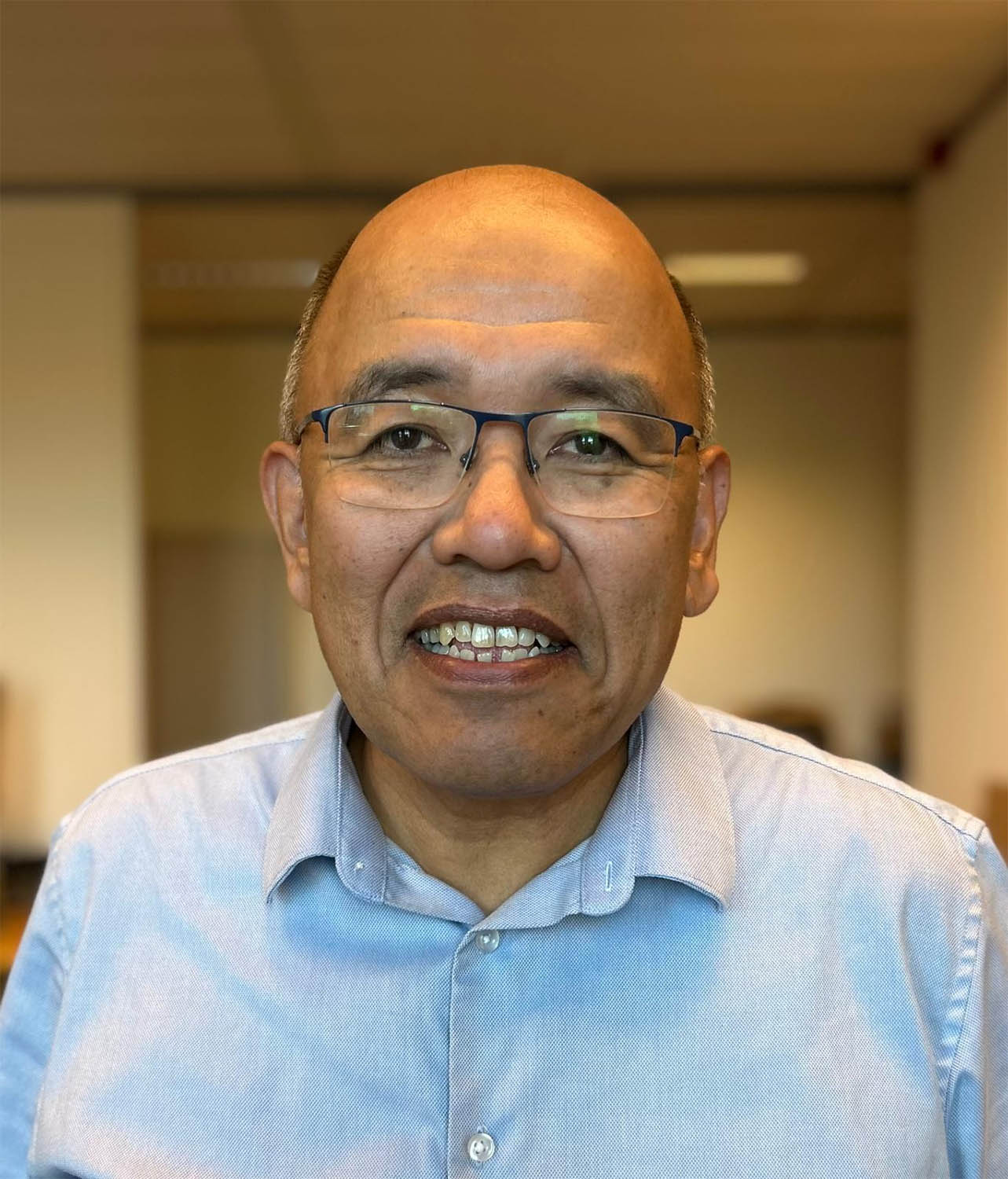
While international crises such as the ongoing war in Iran do not automatically change Tibet’s position, they reshape the system in which our future will be negotiated, and in periods of systemic adjustment, preparedness matters, writes Wangpo Tethong.*
In moments of acute international crisis, it is tempting to view events as geographically contained. The ongoing military conflict mainly between the US and Israel on the one side and Iran on the other side is, at first glance, far removed from Tibet. There is no direct political, military, or economic linkage to the Tibetan issue. And yet, as a member of an international Tibet organization, I cannot view such events as disconnected.
What concerns me is not only the battlefield dynamic, but the systemic and normative one.
When major powers act in ways that appear to stretch or violate international law, the consequences extend far beyond the immediate theatre of conflict. For Tibetans—whose struggle has consistently relied on non-violence, international law, and universal human rights norms—the credibility of those frameworks is not abstract. It is strategic capital. If the rules-based order is applied selectively, it weakens the authority of the powerful, but it also complicates the tools available to peoples without a state of their own.
At the same time, crises reshape geopolitical calculations. The strategic posture of the United States toward China, shifting European alignments, and India’s positioning in a volatile security environment all interact in subtle ways. The Indo-Pacific and Middle Eastern theatres may be distinct security complexes, but they are connected through great-power rivalry, energy flows, and normative competition. Perceptions of distraction, or inconsistency alter risk calculations elsewhere—including across the Taiwan Strait and along the Himalayan frontier.
For Tibet, this is not theoretical. Beijing’s policies in Tibet are inseparable from its broader conception of sovereignty, territorial integrity, and regime security. Any erosion, or reinterpretation of international norms around sovereignty and the use of force inevitably affects the political environment in which Tibet advocacy operates.
There is also a social dimension often overlooked. Tibetan Muslims—predominantly Sunni—exist within a broader regional context that includes significant Shia populations in India and Ladakh. Religious polarization elsewhere does not automatically translate into internal tensions. But global narratives of religious confrontation can reverberate even in communities such as the Tibetan.
An additional layer deserves attention: How are such global crises are perceived in Beijing?
The leadership in China has, over the past decade, projected an image of strategic confidence—anchored in economic scale, centralized authority, and a long-term dystopian vision of national rejuvenation. However, the current international environment is far less predictable than the one in which that confidence was cultivated. And on the other hand, judging from how China has reacted to the attack so far, Beijing‘s potential allies in the region, and above all the Iranian leadership, may finally understand how irrelevant China is compared to the US for the region. Chinese dependency from gas and oil from Iran and from the Gulf region is much greater than its capacity to be a factor in the power balance of the Middle East.
Major-power confrontation, fragmented alliances, economic pressures, and sudden military escalations elsewhere introduce volatility into Beijing’s strategic planning. In moments like these, there is often a first phase of confusion: reassessing risks and chances, recalibrating messaging, evaluating economic vulnerabilities, and testing the reliability of partnerships. Beijing reacts to this confusion with almost complete silence at the moment.
What typically follows such a phase of confusion is a search for a new balance. For Tibetans, the key question is if such periods of transition reshape opportunity structures. Maybe we are hoping for too much.
Historically, moments of global flux have sometimes created diplomatic openings, that smaller actors can strategically engage. At other times, insecurity has led states to harden repression and ideological rigidity.
As a Tibetan, I try to avoid both naïve optimism and fatalism. Instead, we, including all other oppressed people in China such as the Uyghurs, Southern Mongolians and Hongkonger must analyse carefully:
Does China’s search for a global role incentivise flexibility—or reinforce securitisation?
Does contestation of international norms create new spaces to insist on consistent application of international law?
Do shifts in great-power alignment open alternative geopolitical opportunities for people like us?
At this stage, uncertainty dominates. But uncertainty is not inherently negative. It is a transitional condition.
As Tibetans committed to non-violence, and principled engagement, our responsibility is to remain patient, analytically rigorous, and politically prepared. We cannot predict how the emerging balance will look. But we can ensure that when opportunities arise—whether diplomatic or otherwise—we are ready to engage them with clarity.
International crises do not automatically change Tibet’s position. But they reshape the system in which our future will be negotiated. And in periods of systemic adjustment, preparedness matters.
—
* Wangpo Tethong, Executive Director of nternational Campaign for Tibet Europe , has a master’s degree in history from University of Zürich and is the author of a book on Tibetan elites in Exile (Der Wandel in der politischen Elite der Tibeter im Exil: Integrations- & Desintegrationsprozesse in der politischen Elite). He has edited Bhod Shon, a Tibetan Youth Magazine; co-founded Tibetan student circles and the Tibetan Film Festival; and taken many other Tibet initiatives around the world, including the “Future of Tibet” conferences. He has worked with the Green Party (Zurich), Greenpeace Switzerland, and in campaign/communication roles for various Swiss NGOs. He was a member of the 15th Tibetan Parliament-in-Exile from Europe.