


OPINION
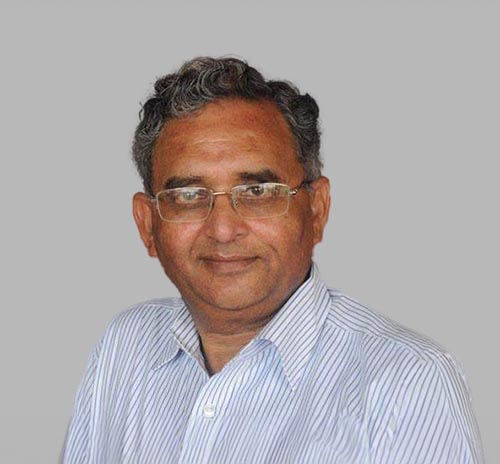
Vijay Kranti* contends: “The Chinese Embassy Spokesperson’s threats to the Modi Government to keep off the Dalai Lama’s reincarnation is the last wake-up call on India. A puppet Dalai Lama in the hands of Beijing will put the security and integrity of India’s entire Himalayan region in jeopardy. This 4000-km-long region is predominantly Buddhist and considered as the ‘first wall of defence’ of India. That makes India a serious stakeholder in the search, selection and installation of the next Dalai Lama.”
The occasion was oath ceremony of the re-elected Tibetan Sikyong (President) in Dharamshala on 27th of May. But the Chinese government used this event to threaten India and push it to follow its diktats. On 25th May, Yu Jing, the spokeswoman at the New Delhi Chinese embassy, openly threatened the Modi government, telling it to not only keep off this event but also “avoid interference in the reincarnation of the Dalai Lama.” For keen observers of China-Tibet-India triangle, it was surprising to note not only the aggressive tone of the Chinese diplomat, but also the use of an unconnected event in Dharamshala to threaten India against any move on the reincarnation of present Dalai Lama.
To many observers, this outburst of the Chinese diplomat against the host government sounded funny as it amounted to provoking the Modi government, which already seemed to be aloof and indifferent to the issue even though it holds serious potential threat to India’s sovereignty and national security along the Himalayan borders.
Many observers like this writer have been already bewildered to note that the Modi government has been maintaining a stoic silence on this issue despite repeated warnings from Indian security agencies and China watchers that Beijing’s attempts to usurp the next incarnation of Dalai Lama has serious potential of threatening India’s sovereignty and security along its entire Himalayan borders. They have been pointing out that almost all monasteries and Buddhist temples of this over 4000-km-long Himalayan belt have been traditionally and overwhelmingly affiliated to their root-Gurus and guardian monasteries in Chinese occupied Tibet. In such a situation, a puppet Dalai Lama in the hands of China can play havoc in this hitherto ‘first line of defence’ of India – and Nepal and Bhutan too.
This latest Chinese ‘fatwa’ gives us a good reason to probe why a communist government which vociferously rejects and condemns even the concept of religion, is so madly glued to the idea of searching the present Dalai Lama’s reincarnation after his death and installing the baby of its own choice as the 15th Dalai Lama of Tibet under the control and guidance of Chinese Communist Party (CCP).
The world has been watching the Beijing leaders using the choicest expletives and abusive terms of the Communist lexicon for Dalai Lama since decades. Expressions like ‘Wolf in the skin of a lamb’, ‘Feudal lord of surf owners’, ‘Splitist’, ‘Traitor’ and the ‘Gang leader of the fugitives’ are liberally used to shower contempt on him. The only other parallel one can see in the frustration, obsession and aggression of Beijing leaders is when they speak about Taiwan.
The institution of Dalai Lama of Tibet is six centuries old and is unique in many ways. The title commands both the temporal powers as in a Monarchy or the Presidential and Prime Minister system of democratic governance or one like the Pope and Ayatollah supremacy in theocracy. The title is transferred to the next heir only through reincarnation. In Tibetan Buddhism, it is believed that every sentient being is reborn into one or other life form after end of each life cycle. But enlightened souls like the Dalai Lamas and other learned monks have the virtue of guiding their own rebirth process. The Dalai Lama is believed to be reincarnation of ‘Avalokiteshwara’ (Sanskrit) or ‘Chenrizig’ (Tibetan), the compassion manifestation of Buddha.
Following the death of a Dalai Lama, the Tibetans search for, identify and install the next Dalai Lama baby boy through a typical process which involves testing of all potential infant candidates after the death of the incumbent Dalai Lama. A major factor which directs this search process is the personal indications and desires indicated by the Dalai Lama himself during his lifetime about the place, family and other elements of his own choice about his next birth. The present Dalai Lama (90 yrs, with the personal name, in brief, of Tenzin Gyatso), is 14th in this tradition. On the issue of his reincarnation, Beijing asserts that no one else on earth shall have any role in the selection and installation of the 15th Dalai Lama – no even the Dalai Lama himself or his private inner circle, called ‘Ganden Phodrang’ which manages and governs the personal establishment of Dalai Lama as an institution. According to Beijing’s communist bosses, this right exclusively rests with the CCP.
This obsession of an atheist CCP over this complex religious exercise originates from the significant place Tibet holds in the present day China’s geopolitical game plan. Before its occupation by China in 1951, Tibet was an independent country with its own national flag, currency, postal system and international relations – at least since 1913 when Tibet successfully pushed out a two-year long presence of Nationalist China in its capital Lhasa to reassert its independence.
It was in 1949 that Mao’s mighty PLA attacked Eastern Tibet and almost annihilated the microscopic Tibetan army. In 1951 Mao threatened and forced the 15 year old Dalai Lama’s government to sign on the dotted lines a ’17-Point Agreement’ which promised protection of Tibetan culture and Dalai Lama’s privileged position. But Tibetans soon found that all Chinese promises were hollow. In 1959 when the Tibetan masses stood up against the CCP rule, the PLA ruthlessly crushed the Tibetan uprising. These events led to the daring escape of the Dalai Lama to India. Since then, he has been residing in the Himalayan town of Dharamshala in northern India, where he heads a nominal Central Tibetan Administration which looks after the welfare, political aspirations and cultural identity of about 150,000 Tibetan refugees who are spread over 27 countries today.
Back in Tibet, China has been facing strong resistance from the Tibetan population right from day one. In the initial years of the occupation rule, this resistance was open and, at places, predominantly violent. But soon it became dormant and sporadic with the increasing grip of PLA and the CCP. In the initial four decades, the new communist masters of Tibet tried every tool under their command to suppress religion with the hope that absence of religion will make people understand and accept communism more faithfully. But in massive uprisings in 1987 and 1989, the Beijing leaders were surprised to note that despite a three-decade long absence of Dalai Lama and banning of religious activities among the masses, the personal devotion of Tibetans towards the Dalai Lama and their faith in Buddhism remained the most dominant uniting force. This forced Beijing to revise their strategy on Tibet.
In 1991 it was decided to use religion as a tool rather than resisting it. This was followed by loosening religious controls, opening up temples and monasteries and giving freedom to common Tibetans to visit temples. The first public signal of this change in the Chinese strategy of occupying the Tibetan religion from within came in 1992 when Beijing decided to undertake and install the reincarnation of the 16th Karmapa, who had gone into exile and died in 1981 as a popular Buddhist teacher. The newly-found six -year old boy Ogyen Trinley Dorje was enthroned in a colorful Buddhist ceremony at Tsurphu, the Tibetan headquarters of Karma Kagyu sect, located in Tibet. A large number of followers of the previous Karmapa were invited from Europe and America and the ceremony was telecast live on the official and national CCTV network.
This process was repeated in 1995 for the identification of the incarnation of 10th Panchen Lama, whom Beijing had used as a counter and replacement of the Karmapa when the latter fled to exile in India in 1999. A committee of senior monks of Tashi Lhunpo, the personal monastery of the Panchen Lamas in Shigatse, was formed under the leadership of a government appointee. But the process became controversial when the monks identified a five year old boy Gedhun Choekyi Nyima as the new incarnate and secretly took approval of the exiled Dalai Lama about the boy’s authenticity as the real incarnation. This angered Beijing so much that Gedhun and his parents were taken away by the Chinese security personnel and another boy of same age, named Gyaltsen Norbu, was formally installed as the new Panchen Lama a couple of days later.
Since then China has consistently refused to respond or share any information on Gedhun or his parents. It was only 25 years later on 19 May, 2020 that, in response to appeals and demands from the UN-related 159 independent organizations from 18 countries, the Chinese government indicated that Gedhun was “now a college graduate with a stable job”. Beijing’s love for its puppet ‘Panchen Lama’ Gyaltsen is understandable because Dalai Lama and Panchen Lama play important role in certifying incarnation of each other and also work alternately as teacher of others’ incarnation. Beijing has placed high stakes on Gyaltsen with the hope that he will be a useful tool when it comes to installing the next Dalai Lama. Over the years CCP has installed scores of small and high ranking incarnate Lamas across Tibet. While Tibetans use term ‘Tulku’ for the incarnate Lamas, they are called ‘Living Buddha’ in China.
To give this process a legal and institutional look, the Chinese government adopted a special law called “Order-5” in 2007. This law governs the search process, certification and installation of future ‘Living Buddhas’ or ‘Tulkus’. This law gives all powers for the selection of any future ‘Living Buddhas’ to the respective Buddhist Associations of the concerned local, provincial or national government. By design, each Buddhist Association is dominated and controlled by senior communist party cadres of the concerned jurisdiction. The main reason behind bringing in such a law is Beijing’s realization that the next Dalai Lama, if born outside their jurisdiction, will be a permanent source of trouble for China. They believe that once the Dalai Lama is under their control, it will be easy for them to tame the Tibetan people. That explains why all efforts of Beijing at the dialogue with Dharamshala in the past have been focused only at bringing back the Dalai Lama to China.
Interestingly, the very first article of ‘Order-5’ claims that its aim is “to guarantee citizens’ freedom of religious belief…… and to respect Tibetan Buddhism’s practice of inheriting Living Buddha positions.” The law lays down ‘expectations’ on each selected Living-Buddha to “…protect the unification of the state” and bars any interference of any foreign organization or individual in the process of searching, identifying or installation of the new incarnation. Another article of ‘Order-5’ declares that any independent effort to search for an incarnate Lama will be treated and punished as a ‘crime’.
In August 2020, while Speaking at the 7th Tibet Work Forum, the highest platform for future planning on Tibet, President Xi Jinping openly declared, “…. Tibetan Buddhism should be guided in adapting to the socialist society and should be developed in the Chinese context.” Earlier, in April 2006, Beijing had already launched its ambitious plan of establishing itself as the world’s Buddhist superpower through its ‘World Buddhist Forum’ project. Organized on alternate years, these forums are aimed at bringing as many senior Buddhist leaders and scholars of different Buddhist lineages from across the world under China’s umbrella, as its money and influence can win. In all these high visibility international shows, held six times so far, Beijing has not only kept the Dalai Lama out, it also presents its own Panchen Lama as the official face of Tibetan Buddhism and the ‘Supreme’ Buddhist leader of the world. The latest one, held at Mount Xeudou in Zhejiang from 15 to 17 October, 2024, was attended by over a thousand Buddhist scholars and leaders from 72 countries.
However, despite all these efforts of their colonial masters, the Tibetan people have persistently resisted these efforts and have refused to accept Giancain as the ‘real’ Panchen Lama. Rather, common Tibetans use contemptuous terms like ‘Gyami Panchen’ (i.e. ‘Chinese Panchen’) and ‘Panchen Zuma’ (i.e. ‘Fake Panchen’) for him in their conversations and resist attending his teachings and meetings. There has been news about the Chinese authorities using cash incentives and police pressure to arrange Tibetan public audiences during many visits of the ‘Gyami’ Panchen Lama to Tibet.
In exile too, the Dalai Lama and ordinary Tibetans have rejected the Chinese idea of holding control of future reincarnations of Tibetan Tulkus. On 24th September 2011, the Dalai Lama issued a detailed official statement about his reincarnation. He asserted, “…..the person who reincarnates has sole legitimate authority over where and how he or she takes rebirth and how that reincarnation is to be recognized. It is a reality that no one else can force the person concerned, or manipulate him or her.” Criticizing the double standard of the Chinese communist leaders in rejecting religion but then taking control of religious rituals, he said, “It is particularly inappropriate for Chinese communists, who explicitly reject even the idea of past and future lives, let alone the concept of reincarnate Tulkus, to meddle in the system of reincarnation and especially the reincarnations of the Dalai Lamas and Panchen Lamas.”
Before this statement, the Dalai Lama played his masterstroke in his annual address to the people of Tibet on March 10 the same year (2011), which happened to be the 52nd anniversary of Tibetan uprising against the Chinese occupation of their country by announcing the bifurcation of the role of Dalai Lama institution. According to the new system, all political powers, so far vested in the Dalai Lama, shall pass on to the‘Sikyong’, an elected representative of Tibet, and the Dalai Lama’s role will be limited only to spiritual matters. In practical terms, this change means that even if China manages to install a Dalai Lama of its choice on Tibet, the real political powers will remain outside the control of Beijing or the CCP. This step of the Dalai Lama has extended the shelf life of his political role beyond his own lifetime and hence to the political struggle for the restoration of Tibetan independence.
In order to thwart the Chinese designs of imposing its own choice of Dalai Lama on the people of Tibet, the US Congress unanimously passed a bipartisan resolution (HR 4331) which was signed by the US President into a law. This new American law forbids and declares any attempt of China to install its own choice of Dalai Lama’s next reincarnation as ‘invalid’ and mandates future U.S. Presidents and their administrations to take strong actions including imposing sanctions on all Chinese CCP leaders and officials who are part of the exercise. It also makes it clear that the decisions of the Dalai Lama and the Central Tibetan Administration at Dharamshala, India, will be considered as final in the selection of the next Dalai Lama. Similar signs emerging from most of European countries and the European Union indicate that Xi Jinping’s dream of establishing a ‘socialist’ Buddhism has more hurdles than he can imagine.
On his 90 birthday in July 2025, the Dalai Lama made a much awaited declaration, in which he said, “I am affirming that the institution of the Dalai Lama will continue… I hereby reiterate that the Gaden Phodrang Trust has the sole authority to recognize the future reincarnation. No one else has any such authority to interfere in this matter.”
Taken aback by the Dalai Lama’s announcement, the CCP leadership came out strongly. Through its spokespersons and media outlets, Beijing stated that the Dalai Lama has no authority to decide on his own reincarnation. In addition, Beijing declared that the reincarnation will require the “Central Government’s” approval. In order to make the Chinese claim on Dalai Lama’s reincarnation look like a ‘historical tradition’ Chinese leaders have been frequently citing the use of a lottery system of lot-drawing from a ‘Golden Urn’, which they claim was executed and monitored by the ‘Chinese’ emperors in the past. But this Chinese claim does not hold much legitimacy as the process was actually used only once for the selection of 11th Dalai Lama (1838-1856) under the erstwhile Manchu Emperor and not by the Hans who themselves were being ruled as colonized subjects of the Manchus.
In his other statement around his 90th birthday, the Dalai Lama appeared to be jabbing at President Xi, saying he was going to live at least till the age of 130. To rub further salt in Beijing’s hurt ego, Penpa Tsering remarked, “We will not be surprised if His Holiness the Dalai Lama as a person outlasts President Xi and his CCP who are losing their popularity inside China quite seriously.”
Now that the swearing in of Mr. Penpa Tsering for a second term as the ‘Sikyong’ of Tibet has taken place despite all Chinese threats and outburst, it is high time for the Modi government to take note of the choice of the wording and the aggression of the Chinese government aimed at New Delhi – especially on the issue of the Dalai Lama’s reincarnation. It deserves to be taken as the last wake-up call for India’s policymakers on national security issues. New Delhi needs to realize that a puppet Dalai Lama in the hand of Beijing is bound to put the security and integrity of India’s Himalayan borders into jeopardy. Hence the need for India to set aside its ongoing indifference and, instead, assert its role as a serious stakeholder in matters related to the search, selection and installation of the next Dalai Lama.
—
* Vijay Kranti is a senior journalist, a veteran Tibet-China watcher and Chairman, Centre for Himalayan Asia Studies and Engagement (CHASE), and can be contacted at v.kranti@gmail.com