


OBITUARY
(TibetanReview.net, Jun14’26) – Mr Lhasang Tsering, one of the best-known faces of the campaign for an independent Tibet, besides being a writer, poet, and journalist, including as a former editor of Tibetan Review, has passed away at the age of 74 on Jun 11. He has not been keeping well for some time and had been moved from his “Exile Home” to the Jampa Ling Old Age Home run by the Central Tibetan Administration (CTA), where he breathed his last in the afternoon.
Lhasang Tsering was born in 1952 in Labrang Kosa in Tradün area of Ngari, Western Tibet. His father was a tantric lama from eastern Tibet who had settled in the west. He was with his family in India on a pilgrimage when the final push in China’s full annexation of Tibet came in 1959. His father passed at Riwalsar, a holy lake in Himachal Pradesh associated with Padmasambhava, while on that pilgrimage.
The rest of his family then joined a road labour camp in Manali, with other Tibetan refugees. After His Holiness settled in Dharamshala in 1960, he was enrolled in the first Tibetan refugee school in India which was set up in Mussoorie, after a brief transit at TCV school in Upper Dharamsala. With another boy and a girl, he was later sent to the Wynberg-Allen school in Mussoorie, founded by the British in 1888, on a scholarship.
After completing school in 1972, he was offered a scholarship to study medicine, but instead opted to join the Tibetan guerrilla force at Lo in the Upper Mustang area of Nepal in order to to fight the Chinese army, remaining there through 1973.
By that time the guerrilla force was on the verge of being dismantled as the United States, whose CIA was supporting it, decided to establish diplomatic ties with China, while Nepal moved to end the Tibetan campaign there with threats of military action. Besides, the guerrilla campaign itself was embroiled in a leadership crisis. Lhasang Tsering returned to India even as he wanted the campaign to continue despite all odds and said he urged the Dalai Lama not to ask the Tibetans to lay down arms.
He served as the Principal of Tibetan Children’s Village school, Upper Dharamshala, from 1976 to 1982, and then joined the Central Tibetan Administration (CTA) in 1983.
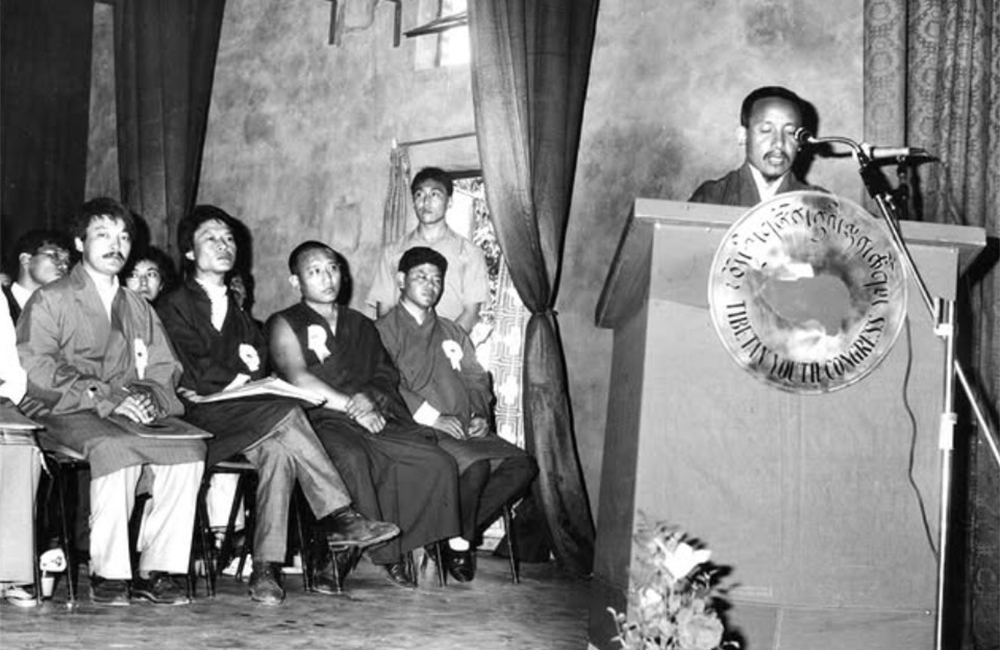
He then left the service on being elected the president of Tibetan Youth Congress (TYC), which campaigns for Tibet’s independence, for two terms from 1986 to 1990. He resigned before completing his second term, citing his opposition to the Middle-Way Policy.
He is a founding member of the Amnye Machen Institute, established in 1992 in Dharamshala to promote Tibetan cultural and intellectual studies. He remained active in it till 1999, after which he started his Bookworm bookstore in McLeod Ganj Town.
He then devoted himself to researching and writing. His works included Tomorrow and Other Poems (2003), Ocean of Melody (2009), an English translation of the songs of the Sixth Dalai Lama Tsangyang Gyatso, and Hold On and Other Verses (2012).
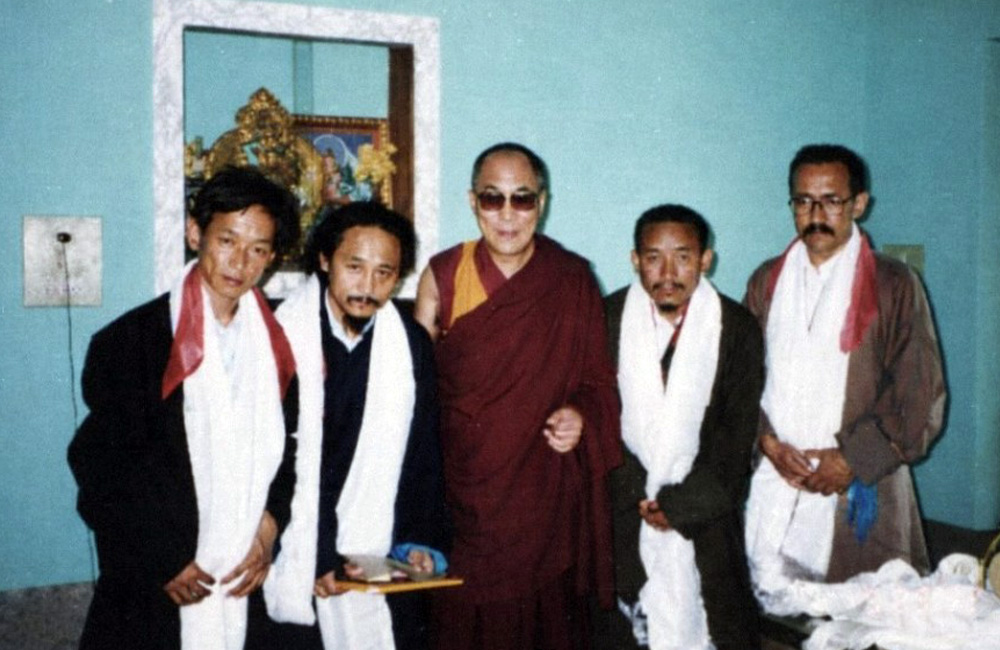
Lhasang Tsering was a vocal critic of the Middle Way policy of seeking autonomy, not independence, for Tibet, which was envisioned by the Dalai Lama as a realistic, mutually beneficial solution with China, and adopted by the CTA.
In an interview for Tibetan Review by independent researcher Ben Byrne in 2020, Lhasang Tsering said he had written a new book titled “No, Your Holiness, No! Saying ‘No’ to His Holiness the Dalai Lama.”
“The book is ready, I’m just waiting for this (Covid-19) lockdown to be over and then I will go down to Delhi and we will see what happens,” he said in that interview.
Lhasang Tsering was predeceased by his wife and a brother, and is survived by a son and a daughter, besides his eldest brother.