


(TibetanReview.net, Feb09’26) – Hydrogen, which produces only water when burned, is regarded as an ideal green energy source and China has recently discovered vast reserves of natural hydrogen sealed in ancient rocks on the Tibetan Plateau, pointing to a new direction for next-generation zero-carbon clean energy exploration, reported China’s major online new outlets, including globaltimes.cn, chinadaily.com.cn, and Xinhua Feb 8-9.
The discovery was made by Chinese scientists, whose research was recently published in Science Bulletin, filling a gap in China’s research in this field.
Led by experts from the Chinese Academy of Sciences’ Institute of Geology and Geophysics, the team found hydrogen trapped inside tiny pockets of liquid within olivine crystals, rocks that come from pieces of ancient seafloor, said the chinadaily.com.cn report.
A process called serpentinization, which is when water reacts with iron- and magnesium-rich rocks, is thought to be the main way in which hydrogen is produced underground, the study was stated to have noted in the academic journal Science Bulletin.
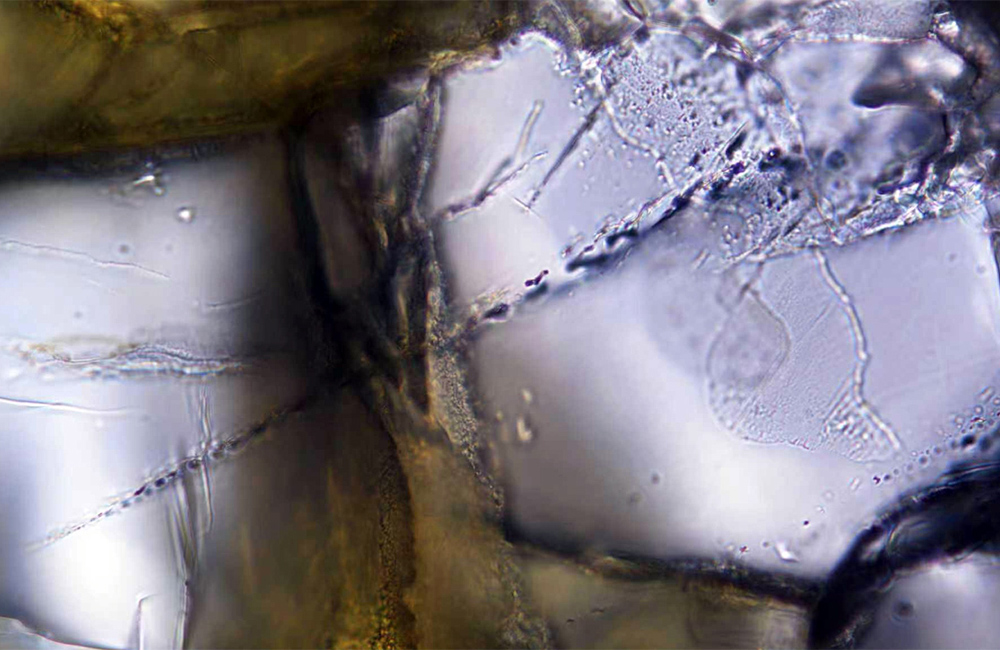
Building on more than a decade of research into the ancient ocean rocks scattered across the plateau, the team zeroed in on a specific site for their study: the Dingqing ophiolite.
The Dingqing ophiolite belt is located in the eastern segment of the Bangong-Nujiang suture zone, Tibet Autonomous Region (TAR). And the Bangong-Nujiang Suture Zone (BNSZ) is a ~1,200–2,400 km long, east-west trending tectonic boundary in central TAR separating the Qiangtang terrane to the north and the Lhasa terrane to the south.
Thus, located in the central-eastern part of the plateau, this area exposes massive stretches of rock that originally came from deep within the Earth’s mantle.
Analysis revealed hydrogen and methane coexisting with minerals, proving ongoing or past hydrogen production. The findings connect hydrogen trapped deep inside rocks with gas that later escapes at the surface, mapping out how it travels underground, the report said.
The plateau’s vast ophiolites (fragments of ancient oceanic crust and upper mantle that have been uplifted and exposed on land, often thrust onto continental margins during tectonic plate collisions) hold “superior geological conditions for forming large-scale hydrogen resources”, the study is cited as saying, describing the finding as a new “clean energy treasure map” for China’s energy security.
The vast size of these ophiolites and the active tectonic environment of the Plateau have created ideal geological conditions for substantial hydrogen accumulation, said the globaltimes.cn report, citing China’s official CCTV (China Central Television).
Globally, natural hydrogen is gaining traction as renewable and carbon-free. As stated in the study: “The Earth’s mantle fuels our future by hosting and emanating natural hydrogen,” said the chinadaily.com.cn report.